How OpenEMR Helps Mobile Clinics Cut Healthcare IT Expenses
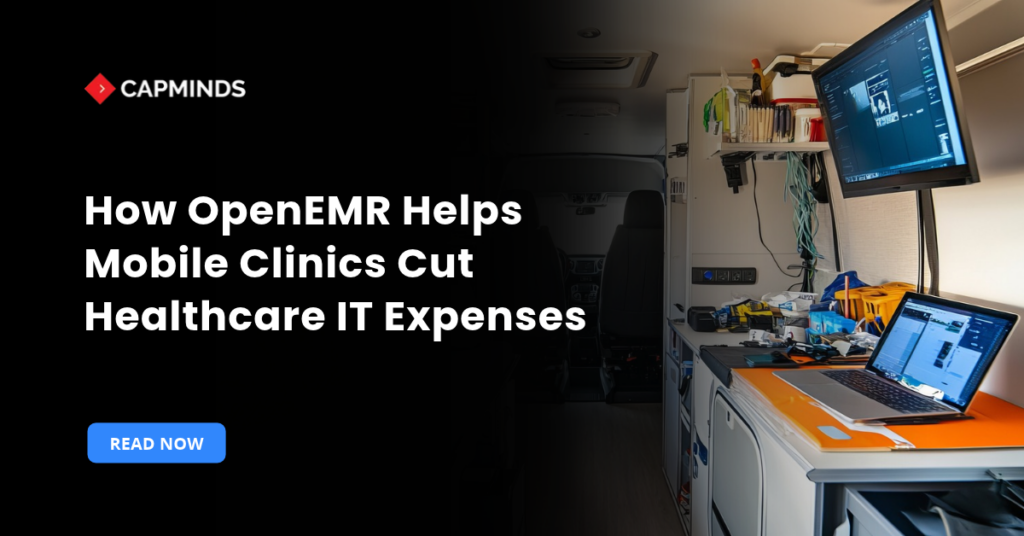
More than 3,600 mobile clinics function in the United States and provide approximately 10 million health care visits annually. As they grow, they face healthcare IT costs, including EHRs, connectivity, billing, cybersecurity, infrastructure, and support.
For many of these organizations, controlling technology spending can be difficult. This includes software licenses, device maintenance, internet services, system integrations, data protection, backups, and technical assistance can add to operating expenses. Working across changing locations can also make it harder to maintain reliable access and consistent technology infrastructure.
OpenEMR can help mobile clinics reduce software-related expenses by bringing key clinical and administrative functions into one platform without proprietary licensing fees. Its customization and integration capabilities can also support different workflows and connect with other healthcare systems, helping clinics avoid unnecessary applications and manage their technology more efficiently.
This blog explores how OpenEMR can help mobile clinics lower healthcare IT expenses while maintaining the technology needed for efficient care delivery.
Why Mobile Clinics Need a Different Healthcare IT Cost Strategy
A fixed facility operates in a permanent environment; a mobile clinic may operate across locations with varying connectivity and limited on-site IT staff.
Depending on operations, its EHR may need to support:
- Patient registration and scheduling
- Clinical documentation
- Electronic prescriptions
- Billing and claims processing
- Laboratory orders and results
- Referrals and care coordination
- Patient engagement
- Reporting and telehealth
- Healthcare interoperability
- Secure access from mobile devices
Beyond these technology requirements, Mobile clinics also need to manage the ongoing costs of maintaining their vehicles and medical equipment.
Regular servicing, repairs, fuel, power systems, computers, tablets, diagnostic devices, and other clinical equipment can add to operating expenses. Keeping these assets reliable is important, as vehicle or equipment downtime can disrupt scheduled services and patient care.
This is why mobile clinics in the USA needs a different healthcare IT cost optimization strategy.
Where OpenEMR Can Help Mobile Clinics Reduce IT Costs
1. OpenEMR Can Eliminate EHR Software Licensing Fees
If a mobile clinic replaces a proprietary EHR with OpenEMR, it may avoid recurring software licensing fees. OpenEMR is free and open-source software, so organizations do not pay a proprietary software license fee for the software itself.
However, implementation and operation can still involve costs for hosting, connectivity, devices, implementation, customization, interoperability, security, backups, training, and ongoing support.
The expensive proprietary EHR cost spending can instead support hosting, connectivity, devices, implementation, interoperability, security, disaster recovery, training, and support.
Removing the license does not eliminate IT costs; it provides greater budget flexibility.
2. One EHR Can Reduce Unnecessary Application Costs
Every additional application can create implementation, user-management, training, maintenance, and integration requirements.
OpenEMR offers integrated EHR and practice-management functionality across scheduling, billing, patient management, clinical workflows, reporting, and patient-facing features. This can simplify the technology environment by reducing unnecessary applications for core workflows.
A simplified workflow could be:
Registration → Appointment → Clinical Encounter → Documentation → Billing → Follow-up
Where OpenEMR appropriately supports these workflows, reducing redundant applications may lower implementation and support overhead. The objective is to avoid unnecessary purchases when OpenEMR can support the function.
3. Customization Can Reduce Costly Workflow Workarounds
Mobile clinics are not all the same. A mobile primary care program may require different workflows from a mobile dental clinic, behavioral health program, maternal health service, or community screening program.
OpenEMR can be customized with specialized forms and workflows for:
- Specialized patient intake
- Community screening
- Specialty documentation
- Referral tracking
- Follow-up
- Custom clinical forms
- Scheduling requirements
- Reporting and billing
Without appropriate configuration, staff may rely on spreadsheets, manual tracking, or additional applications.
Customization requires resources, so changes should solve meaningful workflow problems and justify their ongoing cost.
4. Flexible Deployment Can Help Control Infrastructure Costs
Limited space can affect in-vehicle servers and hardware maintenance.
A well-designed cloud environment can help manage infrastructure and authorized access. However, cloud deployment is not automatically cost-effective or HIPAA-compliant.
If a cloud service provider designs, receives, maintains, or transmits ePHI on behalf of a covered entity or business associate, it is considered a business associate. The organization must address applicable HIPAA requirements, including a BAA where required, risk analysis, security, backup, and recovery.
Mobile clinics should evaluate connectivity, security, backup, support, scalability, and price when selecting a technology partner.
5. Interoperability Can Reduce Manual Data Handling
Mobile clinics may need to exchange information with hospitals, laboratories, specialists, primary care practices, referral systems, billing platforms, telehealth systems, or patient-engagement applications.
With OpenEMR 8.4.1, documentation is available for the FHIR API and Standard API, including Swagger documentation and testing capabilities.
Appropriate integrations can automate relevant data exchanges and reduce repetitive manual entry. For example, laboratory or clinical information may be exchanged into a patient’s record rather than manually re-entered.
FHIR capability alone does not guarantee savings. Integrations should address meaningful workflows and focus on important operational needs.
6. Connected Billing Can Reduce Administrative Friction
A mobile clinic needs a sustainable financial and reimbursement process. Depending on its business model, reimbursement may involve private insurance, Medicare, Medicaid, grants, community programs, or other funding sources.
OpenEMR includes medical billing and is HIPAA ASC X12 Version 5010 transaction and code-set compliant for insurance eligibility, claims, accounts receivable, EOBs, and clearinghouse connectivity.
Connecting clinical and billing information can reduce separate applications and manual data sharing.
A typical workflow is:
Encounter Documentation → Coding → Claim Preparation → Billing → Accounts Receivable
Revenue-cycle configuration depends on the organization’s payers, clearinghouse, billing processes, and operational requirements.
7. Security Must Be Part of the Cost Calculation
Reducing software and infrastructure spending should never compromise security. Computers, networks, EHR systems, cloud environments, users, interfaces, and backups can introduce security risks.
HHS requires covered entities and business associates to conduct an accurate and thorough risk analysis of potential risks and vulnerabilities to the confidentiality, integrity, and availability of ePHI. Organizations should use the results to identify and address appropriate security measures based on their specific risks and circumstances.
Technology budgets should account for:
- Access control
- Authentication
- Network design
- Backups
- Patching
- Scanning
- Monitoring
- Device security
- Incident response
OpenEMR being open source does not remove the organization’s responsibility to properly maintain, secure, back up, support, and manage its deployment. These functions may be handled internally or through qualified technology or IT support partners.
Reduce Mobile Clinic IT Costs With CapMinds OpenEMR Services
OpenEMR can help mobile clinics build a flexible healthcare IT environment without unnecessary software licenses or disconnected applications. However, actual cost savings depend on the right deployment model, workflows, integrations, security controls, and ongoing support strategy.
CapMinds helps healthcare organizations customize and optimize OpenEMR to support clinical workflows, billing, healthcare interoperability, patient engagement, and secure healthcare operations.
Schedule an OpenEMR strategy consultation with CapMinds to identify where your mobile clinic can simplify its technology environment, reduce unnecessary IT costs, and build a scalable roadmap for growth.