Healthcare Managed IT Services
Reduce Healthcare IT Overhead by Up to 40%
With Managed Services
Keep critical healthcare systems available 24/7 with Managed IT Services for Healthcare, protect patient access and revenue, and eliminate daily IT firefighting with one accountable healthcare IT model.















Our Services
One Managed IT Model for Your Healthcare Operations
Advanced Capabilities
Healthcare IT Capabilities Built for Complex Operations
Go Beyond Ticket Resolution
Once the operational foundation is stable, we can help you improve visibility, automation, reliability, and cost control across your healthcare IT systems management environment.
Clinical Service Mapping
Connect technical components to scheduling, documentation, orders, results, claims, portals, and other business-critical workflows.
Custom AIOps Models and Operational Dashboards
We build custom AI models and dashboards to address healthcare IT performance, cost, and reliability challenges.
IT Asset and CMDB Governance
Track assets, dependencies, owners, lifecycle status, support coverage, and systems handling sensitive information.
Customized End-to-End IT Solutions
From infrastructure and cloud to applications, cybersecurity, integrations, data, and support, we connect every layer under one accountable solution.
IoMT and Connected Device Visibility
Discover and classify connected devices while coordinating segmentation, vulnerabilities, ownership, and manufacturer constraints.
Synthetic Workflow Monitoring
Test complete healthcare journeys such as login, scheduling, documentation, results, and billing instead of checking only whether individual systems respond.
Reliability and Capacity Management
Track service targets, recurring failures, resource utilization, capacity trends, and resilience gaps before growth turns them into outages.
Application Portfolio Governance
Identify applications that are redundant, unsupported, underused, costly, or creating integration risk so leadership can consolidate, modernize, or retire them.
Cloud FinOps
Connect cloud spending to applications, environments, owners, utilization, and business purpose to identify waste and improve cost accountability.
Multi-Site Standardization
Create repeatable standards for access, infrastructure, applications, networks, vendors, monitoring, and support across facilities and acquisitions.
ITSM Automation
Automate ticket routing, approvals, common requests, notifications, knowledge reuse, and selected remediation actions to reduce repetitive service work.
Business Outcomes
Business Outcomes That You Can Expect
Case Studies
We’ve successfully implemented a range of solutions. See how healthcare organizations
like yours achieved measurable results with CapMinds.

End-to-End RCM Automation for UiPath Using a Custom EMR
- 100% automation of standard RCM processes
- 50% faster claim turnaround
- Zero errors in claim formatting and submission

Westside Behavioral Care with a Custom EMR Platform
- Centralized EMR with consolidated patient data.
- 100% paperless onboarding process
- 90% automation in scheduling and documentation

UDS Reporting for Ventura County Health Care Agency (VCHCA)
- Automated processing of 100,000+ records
- FHIR validation and HRSA mock submission in 10 weeks
- 100% HRSA compliance
Seeing Gaps in Your Healthcare IT Coverage?
Tell us where support, monitoring, security, recovery, or vendor coordination is creating friction. We’ll help you identify where managed IT support could reduce risk and operational disruption.
Who Do We Serve?
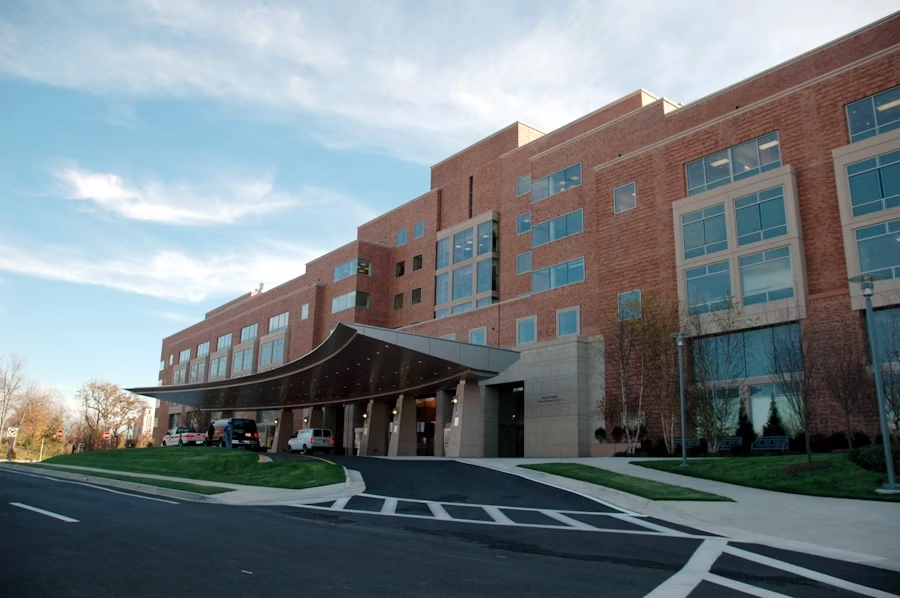
Hospitals & Health Systems

FQHC & Community Health Centers

Multi-Site Medical Groups

Private & Specialty Practices

Behavioral Health Organizations

Laboratories & Imaging Centers

Healthcare Payers

Revenue Cycle & Medical Billing Companies

Digital Health Organizations

Startup Companies

Healthcare Technology Vendors
Why Healthcare Organizations Choose CapMinds?
18+ Years in Healthcare Technology
Bring proven healthcare technology experience to complex decisions, workflows, risks, and long-term transformation goals confidently.

1300+ Completed Projects
Apply lessons from 1300+ completed projects to improve planning, execution, problem-solving, and delivery confidence consistently.
Trusted by 400+ Healthcare Organizations
Partner with a healthcare technology team trusted by 400+ organizations for accountable, dependable project delivery.
Scalable Support Coverage
Scale L1–L3 support, monitoring, and specialist capacity as users, systems, locations, and service demands change.
Healthcare IT Cost Efficiency
Reduce dependence on multiple vendors and hard-to-hire specialists through one coordinated managed IT delivery model.
SLA-Driven Service Quality
Track response, restoration, availability, recurring incidents, backups, interfaces, and service performance against defined operating targets.

What Our Clients Say
Hear from healthcare leaders who’ve transformed their operations with our services & solution.
What Makes US a Trusted Partner
for Managed Health IT
CapMinds combines healthcare IT expertise with proactive monitoring, engineering-backed support, security, recovery, and application operations. We help keep complex healthcare environments stable, responsive, and ready for everyday operational demands.

HIPAA
COMPLIANCE

ISO 9001:2015
CERTIFIED

GDPR
COMPLIANT
SOC 2 TYPE 2
CERTIFIED

HL7 FHIR
STANDARDS

SNOMED CT
COMPATIBLE

HITRUST
ALIGNED
Technology and Integration Experience
Technology and Integrations We Manage Across Your Environment
Applications Platforms ➜

Healthcare Interoperability ➜

Integration Platforms ➜
Infrastructure and Cloud ➜

Data and Analytics ➜

Monitoring and Security ➜

Enterprise Software Support ➜

Run Healthcare IT With Clear Ownership and Expert Support
Get a managed service model designed around your infrastructure, applications, cybersecurity, interfaces, analytics, users, and operational priorities.
- Infrastructure, cloud and DevOps management
- Cybersecurity, SOC and compliance support
- EHR, RCM and application services
- Interoperability and analytics operations
- 24/7 monitoring and support options
Frequently Asked Questions
What are healthcare managed IT services?
Healthcare managed IT services provide ongoing monitoring, maintenance, support, security, and operational improvement for healthcare technology. Coverage can include infrastructure, cloud, networks, databases, EHR and RCM applications, cybersecurity, interfaces, analytics, backup, disaster recovery, and user support.
Can CapMinds work alongside our internal IT team?
Yes. In a co-managed model, we can operate selected service areas, provide after-hours monitoring, manage specialized platforms, handle escalations, or add engineering capacity while your internal team retains governance and ownership of strategic priorities.
What do L1, L2, and L3 support cover?
L1 handles common requests and initial troubleshooting. L2 addresses application, infrastructure, network, database, and configuration issues. L3 covers complex engineering problems involving architecture, code, cloud platforms, integrations, performance, automation, and permanent remediation.
Can CapMinds manage HL7 and FHIR integrations?
Yes. We support HL7, FHIR, X12, DICOM, APIs, certificates, message queues, mappings, transformations, interface engines, endpoints, and connected vendors. Coverage can include monitoring, failed-message investigation, testing, administration, and performance improvement.
How does managed IT onboarding and transition work?
Onboarding begins with discovery and responsibility mapping. We then complete knowledge transfer, access setup, monitoring configuration, ticketing integration, SLA definition, escalation design, immediate risk stabilization, and service validation.
Can CapMinds support cloud, on-premises, and hybrid environments?
Yes. CapMinds can support healthcare environments operating across on-premises infrastructure, private hosting, AWS, Azure, Google Cloud, remote locations, third-party applications, and hybrid architectures.
How is a healthcare managed IT provider different from a general MSP?
A healthcare-focused provider understands how technology incidents affect clinical workflows, patient access, claims, ePHI, integrations, and system availability. General MSPs may be effective at device and infrastructure support but may not provide deep healthcare application, workflow, or interoperability expertise.
Does CapMinds offer 24/7 IT monitoring and support?
We can provide 24/7 monitoring and support for agreed systems and priority levels. The final scope, response targets, escalation requirements, communication process, and restoration responsibilities are defined in the service agreement.
How does CapMinds handle critical incidents and healthcare IT downtime?
CapMinds prioritizes incidents by business and operational impact, coordinates technical and vendor escalation, restores affected services, and keeps stakeholders informed through resolution.
After stabilization, we investigate root causes, document corrective actions, and address recurring weaknesses across infrastructure, applications, integrations, security, backup, and recovery processes.
How does CapMinds support HIPAA-related responsibilities?
CapMinds supports HIPAA-related responsibilities depending on scope; we can support access controls, logging, vulnerability management, backup, incident response, security documentation, evidence management, and risk remediation.
When CapMinds handles ePHI as a business associate, contractual responsibilities and an appropriate Business Associate Agreement should be established. HHS guidance makes clear that healthcare cybersecurity requires ongoing organizational, technical, and operational practices rather than a one-time compliance activity.
How much do healthcare managed IT services cost?
The managed health IT service cost typically ranges from $150 to $300/user/month. However, these are rough estimates. The pricing depends on service coverage, support hours, locations, users, applications, infrastructure, interfaces, security requirements, ticket demand, and SLA targets. Engagements may use a fixed monthly, capacity-based, service-specific, or blended model after an environment assessment.
What should a healthcare managed IT SLA measure?
A useful SLA should cover more than ticket closure. It may include response, escalation, communication, restoration, ticket aging, availability, backup performance, interface queue age, change success, security response, recovery testing, application performance, and recurring-incident reduction.
Resources
Insights for Healthcare Technology Teams.
Payer Managed Application Services: What to Retain Internally and What to Outsource
Health insurance payers rely on applications to manage claims, enrollment, provider networks, prior authorizations, payments, member services, and regulatory reporting. An enrollment feed can finish successfully while […]
Healthcare Managed Application Services: What to Outsource After EHR and ERP Transformation
An EHR or ERP transformation is often treated as the finish line. For a health system, it is usually the moment when the harder operational work begins. […]
How Managed IT Services Support HL7 and FHIR Integrations
Nine in ten US hospitals enabled patient access through an application programming interface, but only seven in ten did so through a standards-based API. If APIs are […]