NIST Implementation Services for Healthcare
Build a Resilient Healthcare Security Framework
with NIST Implementation
Turn NIST standards into active defense. Secure clinical networks, cloud workloads, and vendor access to eliminate exposure, protect care continuity, and prove security ROI.





















Our NIST Implementation Services
Implement NIST Across Clinical, Business, and IT Systems
Advanced Capabilities
Advanced Capabilities for Testing Critical Healthcare Security Controls
Clinical Device Segmentation
Test which devices can reach clinical servers, management systems, and external services. Evaluate segmentation changes with biomedical engineering and vendor support teams before deployment.
Vendor Access With a Defined End Time
Restrict external support to approved systems and time windows. Record who approved the connection, what access was granted, and when it was removed.
Emergency Access That Leaves an Audit Trail
Validate emergency access workflows so clinicians can reach necessary systems during disruptions and security teams can review how that access was used afterward.
Clinical Recovery in Dependency Order
Test restoration in the order services need it: identity and networking, then application data, interfaces, and downstream workflows. Compare measured recovery times with agreed objectives.
Shared Control Ownership
Separate controls your organization operates from those inherited from cloud providers, EHR vendors, or managed service partners. Identify who supplies evidence for each responsibility.
Detection Coverage for Critical Systems
Map priority systems to their expected log sources and test representative alerts. Identify visibility gaps where legacy devices or vendor platforms restrict telemetry.
Security Exceptions With Expiry Dates
Record why a control cannot be applied, which safeguards compensate for the gap, and when the decision must be reviewed. Escalate overdue exceptions to the designated owner.
Containment That Accounts for Care Delivery
Exercise incident scenarios with security, clinical operations, and IT. Establish who can isolate systems, what services may be affected, and when downtime procedures should begin.
Business Outcomes
Business Outcomes You Can Expect
Case Studies
We’ve successfully implemented a range of solutions. See how healthcare organizations
like yours achieved measurable results with CapMinds.

End-to-End RCM Automation for UiPath Using a Custom EMR
- 100% automation of standard RCM processes
- 50% faster claim turnaround
- Zero errors in claim formatting and submission

Westside Behavioral Care with a Custom EMR Platform
- Centralized EMR with consolidated patient data.
- 100% paperless onboarding process
- 90% automation in scheduling and documentation

UDS Reporting for Ventura County Health Care Agency (VCHCA)
- Automated processing of 100,000+ records
- FHIR validation and HRSA mock submission in 10 weeks
- 100% HRSA compliance
Which Security Gap Is Hardest to Close Right Now?
Bring one unresolved finding, vendor access concern, or recovery dependency. We’ll talk through what would make it actionable and where implementation could begin.
Who Do We Serve?

Hospitals & Health Systems

Integrated Delivery Networks

Community & Rural Hospitals

Federally Qualified Health Centers

Multi-Site Medical Groups

Specialty Clinics & Ambulatory Networks

Laboratories & Diagnostic Organizations

Digital Health Companies

Healthcare Software Vendors

Healthcare Research Organizations
Why Choose CapMinds as Your NIST Implementation Company?
18+ Years in Healthcare Technology
Apply long-standing healthcare experience to workflow decisions, interoperability challenges, operational risks, and modernization planning.

One Project Lead From Assessment to Handoff
Work with one designated project manager who coordinates engineers, tracks milestones, and flags decisions that could affect cost or timing.
Acceptance Criteria Before Implementation
Agree on the evidence and tests required for each milestone so stakeholders can verify the work before approving the next phase.
Support Defined Before Handoff
Agree on responsibility for monitoring, evidence refresh, exceptions, and incident escalation before delivery ends, with ongoing support scoped where needed.
100% of Assessed Controls Documented
Record the status of every control in scope, linking it to supporting evidence or a documented gap so your team knows what still needs work.
90-Day Remediation Roadmap
Get a prioritized plan for your first 90 days, with effort estimates, dependencies, and milestones to guide security spending and delivery.

What Our Clients Say
Hear from healthcare leaders who’ve transformed their operations with our services & solution.
What Makes CapMinds a Practical NIST Implementation Partner?
Hospital security boundaries span EHR vendors, biomedical teams, and cloud platforms. CapMinds unites application, integration, and cybersecurity engineering into a single NIST implementation scope. We streamline change management and verify security controls without disrupting the clinical workflows they protect.
HIPAA
COMPLIANCE

ISO 9001:2015
CERTIFIED

GDPR
COMPLIANT

SOC 2 TYPE 2
CERTIFIED

HL7 FHIR
STANDARDS

SNOMED CT
COMPATIBLE

HITRUST
ALIGNED
Technology & Platform Experience
The Frameworks, Systems, and Tools Behind NIST Implementation
NIST Frameworks & Control References

Healthcare Systems & Dependencies

Identity & Privileged Access

Networks & Endpoint Protection

Monitoring & Incident Response

Recovery & Continuity

Governance & Evidence

Ready to Close a NIST Gap That Keeps Coming Back?
Tell us what has stayed open and what has made it difficult to resolve. A recent finding, a system name, or a workflow description is enough to start.
- Scope a NIST assessment or implementation
- Prioritize risks to clinical and business operations
- Implement and test selected security controls
- Establish control ownership and usable evidence
- Plan monitoring and support after rollout
Frequently Asked Questions
Which NIST publication should our healthcare organization start with?
CSF 2.0 is a useful starting point for organizing cybersecurity outcomes. SP 800-53 helps teams select and tailor controls. SP 800-171 is relevant when an applicable federal agreement requires protection of Controlled Unclassified Information in nonfederal systems. We confirm the applicable scope and version before implementation.
Does SP 800-171 apply to all healthcare data?
No. SP 800-171 addresses Controlled Unclassified Information in applicable nonfederal systems. We review the governing agreement and identify where CUI is processed, stored, or transmitted, including components that protect those systems.
How do you assess clinical devices that cannot be patched or actively scanned?
We review vendor guidance, available inventory, network paths, and permitted evidence before selecting a test method. Where direct changes are constrained, we evaluate alternatives such as segmentation and restricted access, then document the remaining risk.
Can controls be rolled out without disrupting clinical operations?
We plan around care dependencies and agree on change windows, acceptance checks, and rollback criteria before rollout. Changes affecting critical access or connectivity are staged where feasible and coordinated with the teams responsible for clinical operations.
How long does a NIST implementation take?
A first working NIST CSF implementation in healthcare typically takes 9-12 months, reaching mature Tier 3 takes 18-24 months, and full integration at large multi-hospital systems takes 36-48+ months. NIST 800-53 or HITRUST certification adds roughly 6-12 months. These are consultant estimates, not independently measured averages.
These are estimates; the exact timing depends on the systems in scope, evidence access, control gaps, vendor involvement, and available change windows. An assessment of one environment can be scoped separately from remediation across multiple facilities. Discovery establishes the sequence and reviewable milestones.
Does implementing NIST satisfy the HIPAA Security Rule?
NIST guidance can support implementation, but it does not establish HIPAA compliance on its own. SP 800-66 Rev. 2 helps regulated entities relate Security Rule requirements to cybersecurity activities and NIST controls. We use the mapping to organize the work and its evidence against applicable obligations.
Can you implement NIST controls using our existing security tools?
Yes, CapMinds can implement NIST controls only where those tools can meet the agreed control requirements. We review coverage, configuration, and available evidence before recommending a new platform. An existing tool may need better integration or configuration rather than replacement.
What evidence do you collect during a NIST assessment?
Depending on the control, evidence can include identity exports, firewall rules, access review records, monitoring coverage, and observed restore results. We document the systems sampled and distinguish verified controls from those that could not be tested.
What happens when a critical risk cannot be fixed immediately?
When a critical risk cannot be fixed immediately, we document the exposure, assign an owner, and evaluate interim safeguards. The designated decision-maker approves the treatment or accepts the remaining risk with a review date. The finding stays visible until it is resolved or formally reassessed.
What support is available after implementation?
Support can include evidence refresh, configuration drift reviews, exception tracking, remediation follow-up, and reassessment after material changes. Monitoring coverage, response responsibilities, and escalation expectations are agreed as part of the support scope.
Resources
Insights for Healthcare Technology Teams.
How to Build a Disconnected Environment System Using OpenEMR
For the past decade, enterprise healthcare IT operated on a single, unquestioned assumption: the cloud is always reachable. Multi-campus hospital networks, Management Services Organizations, and specialty medical […]

How OpenEMR Helps Mobile Clinics Cut Healthcare IT Expenses
More than 3,600 mobile clinics function in the United States and provide approximately 10 million health care visits annually. As they grow, they face healthcare IT costs, […]
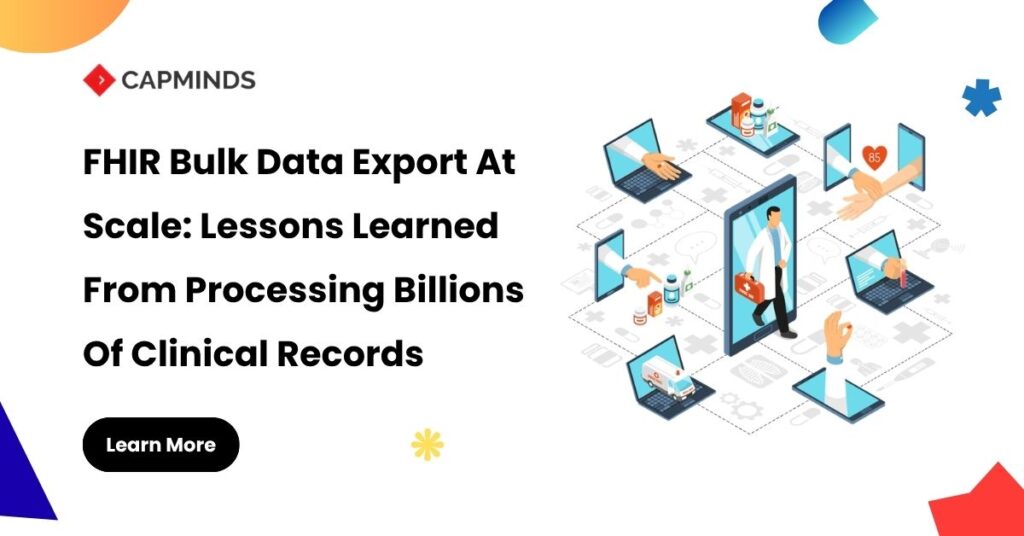
FHIR Bulk Data Export At Scale: Lessons Learned From Processing Billions Of Clinical Records
Processing a few thousand FHIR resources is straightforward. Processing billions is an entirely different discipline, one where the wrong architecture doesn’t just slow you down; it brings […]