AI Revenue Cycle Automation
Protect Revenue and Accelerate Cash With AI Revenue Cycle Automation
Connect AI, workflow automation, and healthcare integrations across coding, claims, authorizations, payments, denials, and A/R, without removing the financial controls your organization depends on.





















Our Services
Automate Revenue Cycle Work Without Losing Financial Control
Advanced Capabilities
Control the Decisions That Move Revenue Through the Cycle
AI and Rules-Based Orchestration
Use AI where interpretation or prediction adds value while retaining deterministic rules for required formats, validations, thresholds, and financial controls.
Evidence-Linked Recommendations
Show the documentation, transaction, payer response, rule, or data element supporting each recommendation so users can evaluate it before acting.
Confidence-Based Work Queues
Automatically process approved low-risk scenarios and route uncertain, high-value, conflicting, or policy-sensitive cases to qualified reviewers.
Payer-Specific Workflow Configuration
Maintain different requirements, submission paths, edits, timelines, documentation rules, and escalation procedures by payer, plan, service, and location.
Revenue Cycle Data Reconciliation
Compare information across scheduling, registration, EHR, coding, billing, clearinghouse, payer, banking, contract, and accounting systems.
Clinical-to-Financial Traceability
Connect the encounter, documentation, diagnosis, procedure, authorization, charge, claim, adjudication, payment, and follow-up history.
Human Review and Approval Boundaries
Define which activities AI may recommend, prepare, prioritize, submit, post, adjust, or escalate—and which require authorized human approval.
Model and Rule Version Governance
Track models, prompts, business rules, payer policies, code-set versions, thresholds, approvals, releases, test results, and rollback points.
Denial and Payment Explainability
Present the factors that influenced a risk score, prioritization decision, underpayment finding, or recommended next action.
Workflow Exception Management
Create controlled pathways for missing data, conflicting eligibility, unsupported coding, pended authorizations, rejected claims, unmatched payments, and payer-system failures.
Business Outcomes
Turn Revenue Cycle Automation Into Measurable Business Value
Case Studies
We’ve successfully implemented a range of solutions. See how healthcare organizations
like yours achieved measurable results with CapMinds.

End-to-End RCM Automation for UiPath Using a Custom EMR
- 100% automation of standard RCM processes
- 50% faster claim turnaround
- Zero errors in claim formatting and submission

Westside Behavioral Care with a Custom EMR Platform
- Centralized EMR with consolidated patient data.
- 100% paperless onboarding process
- 90% automation in scheduling and documentation

UDS Reporting for Ventura County Health Care Agency (VCHCA)
- Automated processing of 100,000+ records
- FHIR validation and HRSA mock submission in 10 weeks
- 100% HRSA compliance
Not Sure Which RCM Workflow to Automate First?
Tell us where manual effort, exceptions, delays, or revenue leakage are creating pressure. We’ll help evaluate the workflow, integration needs, financial impact, and the right mix of AI, rules, and automation.
Who Do We Serve?

Hospitals and Health Systems

Medical Groups and Multi-Site Practices

FQHCs and Community Health Centers

Behavioral Health Organizations

Specialty and Ambulatory Organizations

Ambulatory Surgery Centers

Healthcare Payers and Health Plans

RCM and Medical Billing Companies

Digital Health and Healthcare SaaS Companies

Healthcare Software Vendors

Laboratories and Diagnostic Organizations

Home Health and Post-Acute Organizations
Why Healthcare Organizations Choose CapMinds?
18+ Years in Healthcare Technology
Bring proven healthcare technology experience to complex decisions, workflows, risks, and long-term transformation goals confidently.

1300+ Completed Projects
Apply lessons from 1300+ completed projects to improve planning, execution, problem-solving, and delivery confidence consistently.
Trusted by 400+ Healthcare Organizations
Partner with a healthcare technology team trusted by 400+ organizations for accountable, dependable project delivery.
Healthcare RCM Automation Expertise
Connect AI, rules, and workflow automation across revenue-cycle stages while preserving payer requirements, financial controls, and human review.
Payer & Transaction Integration Expertise
Connect EHR, RCM, clearinghouse, payer, and banking workflows so revenue transactions move accurately from eligibility through payment posting.
Financial Control Assurance
Validate automated decisions, exceptions, approvals, and transactions before financial actions reach claims, payments, adjustments, or write-offs in production.

What Our Clients Say
Hear from healthcare leaders who’ve transformed their operations with our services & solution.
What Makes US a Trusted
AI Revenue Cycle Automation Partner
CapMinds combines healthcare RCM expertise with governed automation, reliable transaction integration, financial controls, and rigorous validation to protect revenue throughout production workflows.

HIPAA
COMPLIANCE

ISO 9001:2015
CERTIFIED

GDPR
COMPLIANT
SOC 2 TYPE 2
CERTIFIED

HL7 FHIR
STANDARDS

SNOMED CT
COMPATIBLE

HITRUST
ALIGNED
Technology and Integration Expertise
Technologies Selected Around Your Revenue Cycle
Healthcare Transaction Standards ➜

Claims Attachment Readiness ➜

Healthcare Interoperability ➜
Prior Authorization Standards ➜

Coding and Financial Standards ➜

Artificial Intelligence and Machine Learning ➜

Generative AI Platforms ➜

Convert Revenue Cycle Friction Into Controlled Financial Performance
Move beyond disconnected bots and isolated AI models with automation connected to your healthcare data, transactions, systems, teams, controls, and measurable revenue priorities.
- Automate high-volume revenue-cycle transactions
- Identify preventable claim risk earlier
- Keep coding recommendations evidence-linked
- Accelerate authorization and eligibility workflows
- Reconcile payments, adjustments, and deposits
- Focus A/R teams on the right accounts
- Detect leakage and underpayments sooner
- Measure adoption, performance, cost, and financial value
Frequently Asked Questions
How does CapMinds prevent unsupported coding suggestions?
We can preserve the documentation passage, extracted clinical concept, applicable rule, terminology mapping, confidence score, model version, and reviewer action behind each recommendation. Low-confidence, conflicting, high-risk, or policy-sensitive cases can be routed to qualified coders rather than posted automatically.
Can the solution support FHIR-based prior authorization?
Yes, our solution supports FHIR-based prior authorization. When the involved payer, EHR, and other systems support the relevant implementation guides and authentication model. Potential standards include FHIR R4, SMART backend services, and the Da Vinci Prior Authorization Support implementation guide. Current X12 and portal workflows may still need to coexist.
Can we keep our existing clearinghouse?
Yes, you can keep the existing clearinghouse. We provide the clearinghouse supports the transactions, acknowledgment data, status responses, attachment workflows, and integration access required by the automation. The assessment should distinguish responsibilities across your EHR, billing platform, clearinghouse, payer, bank, and internal teams.
Can the automation run in our cloud environment?
Yes. Automation can run in cloud environment. Depending on the selected technology, it can run in your AWS, Azure, Google Cloud, private-cloud, hybrid, or on-premises environment. Architecture decisions should account for existing investments, transaction volume, latency, security, vendor agreements, operating skills, support, and cost.
How much does AI revenue cycle automation cost?
Cost depends on transaction volume, number of workflows, data quality, interfaces, payer variation, model development, RPA requirements, security, cloud usage, user experience, testing, and post-launch support. Reliable pricing requires a defined workflow, representative data, technical architecture, control requirements, and measurable acceptance criteria.
Does a successful eligibility response guarantee payment?
No. eligibility response does not guarantee payment. Eligibility confirms information available from the health plan at the time of inquiry. Payment can still depend on benefit limitations, authorization, medical necessity, coding, documentation, network status, coordination of benefits, and payer adjudication.
Can CapMinds integrate with our existing EHR and RCM systems?
Yes. CapMinds can help to integrate AI with the existing EHR and RCM systems. The Integration may use vendor APIs, FHIR, HL7, X12 transactions, interface engines, secure files, database services, event streams, or controlled automation. The final method depends on supported interfaces, contractual access, workflow timing, data ownership, transaction volume, and write-back requirements.
Does AI revenue cycle automation make us HIPAA compliant?
No. implementing AI revenue cycle automation does not make HIPAA compliant automatically. An AI platform or automation does not independently establish HIPAA compliance. The full workflow still requires appropriate agreements, risk analysis, permitted use, access controls, safeguards, monitoring, policies, incident procedures, documentation, and workforce responsibilities.
How long does AI revenue cycle automation take?
A bounded workflow with accessible data and supported integrations may be delivered in several weeks. Enterprise automation involving multiple facilities, payers, transaction types, clinical systems, financial controls, and extensive validation may require several months. Timing depends on scope, data readiness, access, integration complexity, stakeholder availability, testing, and approvals.
What happens after the automation launches?
Post-launch work includes monitoring transactions, exceptions, accuracy, overrides, payer changes, financial reconciliation, user adoption, security events, infrastructure, and operating costs. Teams may also update rules, models, prompts, integrations, thresholds, dashboards, test scenarios, and workflow responsibilities as conditions change.
Resources
Insights for Healthcare Technology Teams.
Automate Hospital Scheduling and Billing Conversations Without Letting GenAI Make Clinical Decisions
What if a hospital could automate thousands of patient scheduling and billing conversations every month without allowing a generative AI model to diagnose a patient, determine clinical […]
Custom Dashboards vs. Off-the-Shelf BI in Healthcare: What Does Your Organization Need?
Healthcare organizations generate massive data daily. Business Intelligence dashboards transform this raw data into visual insights for decision-making. For example, one hospital can produce 50,000 terabytes of […]
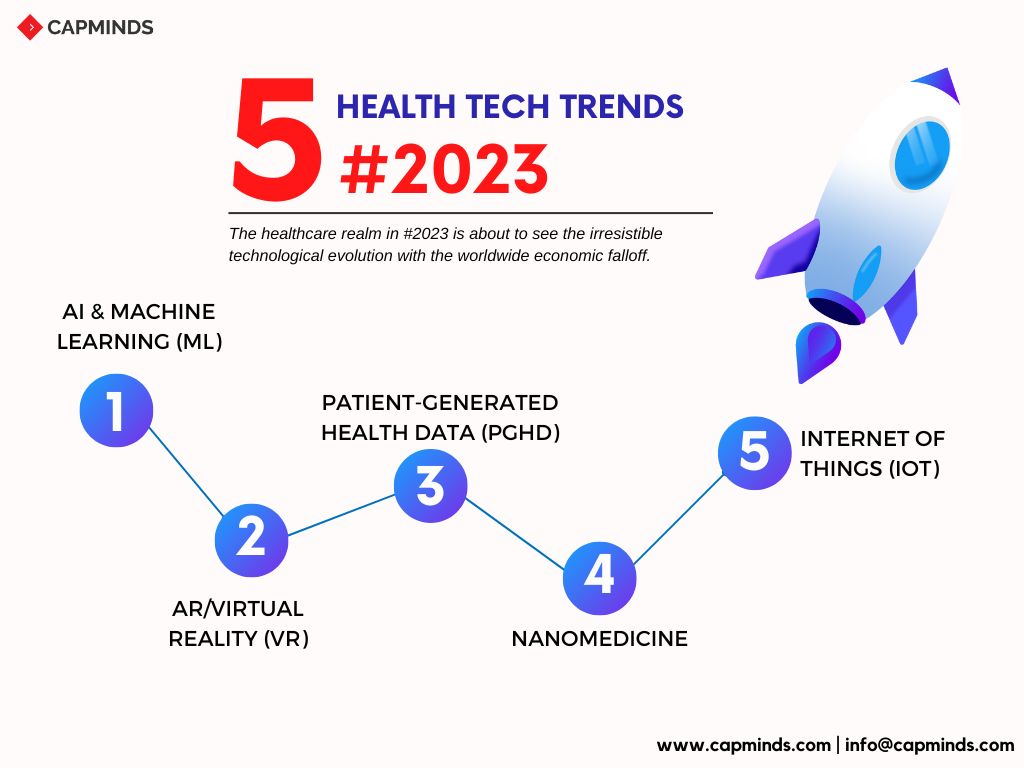
The Top 5 Healthcare Tech Trends for 2025
The healthcare spectrum is experiencing a tornado of technological advancements right now. Constant change and innovation are happening in the sector.