Healthcare Cybersecurity Service
Build 24/7 Cyber Resilience Around Critical Healthcare Operations
Connect prevention, monitoring, threat detection, incident response, and
recovery across your healthcare technology environment to reduce disruption
and keep essential clinical and business services available.




















Our Services
Secure the Healthcare Environment Your Operations Depend On
Advanced Capabilities
Strengthen the Security Layers Around Patient Care
Healthcare Risk Assessment
Identify the systems, threats, vulnerabilities, and operational dependencies that create the greatest risk to care delivery and sensitive information.
Asset & Data Visibility
Map critical systems, endpoints, cloud assets, PHI flows, applications, and unmanaged technology so security decisions start with a reliable inventory.
Medical Device Security
Improve visibility and segmentation around network-connected medical and IoMT devices while accounting for manufacturer and clinical operating constraints.
Cloud Security
Assess identities, workloads, networks, configurations, logging, and data controls across AWS, Azure, Google Cloud, and hybrid healthcare environments.
Third-Party Risk
Evaluate healthcare vendors, technology partners, and service providers against defined security expectations and business-critical dependencies.
Security Hardening
Reduce unnecessary attack surface through secure baselines, patching, configuration improvements, service reduction, and control validation.
Detection Engineering
Turn security telemetry into meaningful detections aligned with your environment, threat scenarios, critical assets, and response priorities.
Cyber Recovery Readiness
Validate backups, recovery dependencies, escalation paths, and operational procedures before ransomware or another major incident disrupts services.
Security Governance
Connect cybersecurity priorities, controls, risk decisions, ownership, evidence, and executive reporting through one accountable security program.
Business Outcomes
Turn Cybersecurity Investment Into Business Value
Case Studies
We’ve successfully implemented a range of solutions. See how healthcare organizations
like yours achieved measurable results with CapMinds.
End-to-End RCM Automation for UiPath Using a Custom EMR
- 100% automation of standard RCM processes
- 50% faster claim turnaround
- Zero errors in claim formatting and submission

Westside Behavioral Care with a Custom EMR Platform
- Centralized EMR with consolidated patient data.
- 100% paperless onboarding process
- 90% automation in scheduling and documentation

UDS Reporting for Ventura County Health Care Agency (VCHCA)
- Automated processing of 100,000+ records
- FHIR validation and HRSA mock submission in 10 weeks
- 100% HRSA compliance
Not Sure Which Cyber Risks to Address First?
Tell us about your critical systems, security stack, known gaps, and operational concerns. We’ll help prioritize the risks that deserve attention first and identify where your next security investment can create the greatest impact.
Who Do We Serve?
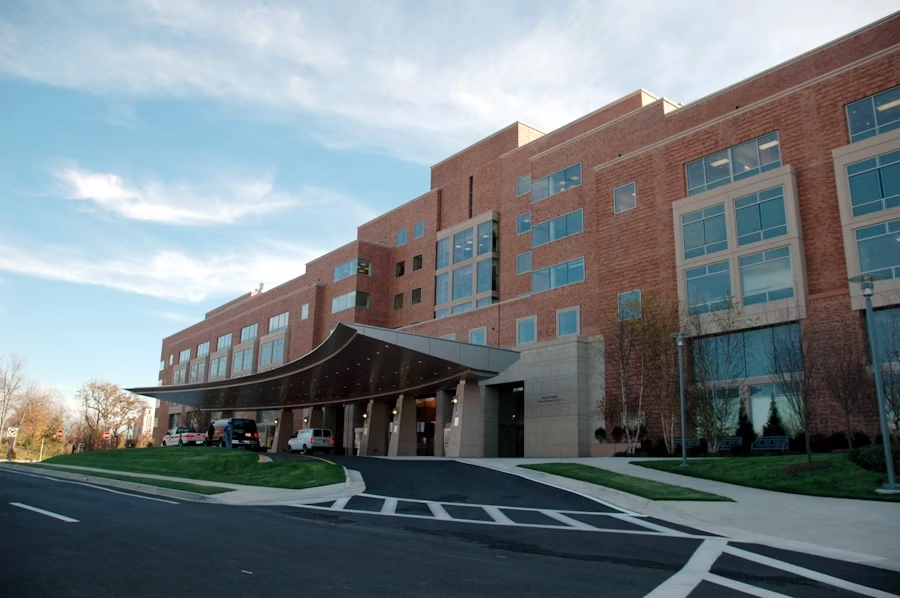
Hospitals & Health Systems

Medical Groups & Multi-Site Practices

FQHCs & Community Health Centers

Behavioral Health Organizations

Specialty & Ambulatory Practices

Ambulatory Surgery Centers

Healthcare Payers & Health Plans

Laboratories & Diagnostic Organizations

Imaging Centers

Home Health & Post-Acute Organizations

RCM & Medical Billing Companies

Digital Health Companies

Startup Companies

Healthcare Technology Vendors
Why Healthcare Organizations Choose CapMinds?
18+ Years in Healthcare Technology
Bring proven healthcare technology experience to complex decisions, workflows, risks, and long-term transformation goals confidently.
1300+ Completed Projects
Apply lessons from 1300+ completed projects to improve planning, execution, problem-solving, and delivery confidence consistently.
Trusted by 400+ Healthcare Organizations
Partner with a healthcare technology team trusted by 400+ organizations for accountable, dependable project delivery.
24/7 Healthcare Threat Monitoring
Monitor security activity continuously so suspicious behavior is investigated quickly before threats disrupt critical healthcare systems or operations.
Rapid Incident Response & Recovery
Move from detection to containment and recovery through playbooks, escalation paths, and healthcare-aware response coordination when incidents occur.
Healthcare Cyber Resilience Expertise
Protect clinical systems, identities, endpoints, networks, cloud workloads, and recovery capabilities through security controls designed for healthcare operations.

What Our Clients Say
Hear from healthcare leaders who’ve transformed their operations
with our services & solution.
What Makes US a Trusted
Healthcare Cybersecurity Partner
CapMinds combines healthcare security expertise with continuous threat monitoring, rapid incident response, risk-based protection, and recovery readiness to strengthen cyber resilience across critical healthcare operations.
HIPAA
COMPLIANCE

ISO 9001:2015
CERTIFIED

GDPR
COMPLIANT
SOC 2 TYPE 2
CERTIFIED

HL7 FHIR
STANDARDS

SNOMED CT
COMPATIBLE

HITRUST
ALIGNED
Technology and Security Experience
Security Technologies Selected Around Your Environment
SIEM & Security Operations ➜
Endpoint, EDR & XDR ➜

Identity & Access ➜
Data Security & DLP ➜

Network Security ➜

Vulnerability Management ➜
Application Security ➜

Comparison Table
Compare Healthcare Cybersecurity Approaches
| Evaluation Area | General MSP Security | Point Security Vendor | CapMinds Healthcare Cybersecurity |
|---|---|---|---|
| Starting point | IT environment | Security product | Healthcare operations and cyber risk |
| Healthcare context | Varies | Limited to product | Clinical, operational, financial, data, and technology workflows |
| Endpoint security | Managed antivirus/EDR | Own platform | Endpoint, EDR, policy, monitoring, and response integration |
| Data protection | Basic controls | Product specific | PHI-aware classification, DLP, access, and monitoring |
| Network security | Firewall and network support | Appliance focused | Segmentation, clinical systems, medical devices, cloud, and remote access |
| Security monitoring | Basic alerts | Own telemetry | Multi-source monitoring, threat intelligence, investigation, and escalation |
| Ransomware | Backup or endpoint focus | Product dependent | Identity, endpoints, segmentation, vulnerability, recovery, and response |
| Incident response | Escalation | Product support | Planning, investigation, containment, recovery, and improvement |
| NIST alignment | Limited | Outside scope | Assessment, implementation roadmap, governance, and evidence |
| Vulnerability testing | Scanning | Product scanning | Vulnerability assessment, penetration testing, remediation, and retesting |
| SOC/MDR/XDR | Outsourced monitoring | Own ecosystem | Managed monitoring integrated with your security environment |
| SIEM | Log management | Own platform | Architecture, onboarding, detections, threat intelligence, and response workflows |
| Identity | Microsoft/AD support | Identity product | IAM, SSO, MFA, lifecycle, privilege, and governance |
| Zero Trust | Secure access tools | Product positioning | Identity, device, segmentation, access policy, and architecture |
| Application security | Limited | Security product | Web, API, code, dependencies, SDLC, and penetration testing |
| Success measure | Tickets and uptime | Product adoption | Risk reduction, resilience, response, coverage, cost, and business continuity |
Strengthen Security Before the Next Incident Tests It
Focus first on the systems, identities, data, and workflows your organization cannot afford to lose.
- Identify your highest-priority cyber risks
- Close critical protection and visibility gaps
- Build a clear path from security strategy to operations
Frequently Asked Questions
What do security monitoring services include?
Security monitoring can include centralized telemetry collection, alert triage, threat intelligence, correlation, investigation, threat hunting, escalation, and response coordination. The exact operating model should reflect your systems, risk level, security stack, business hours, internal staff, and required response coverage.
Can CapMinds test EHR-connected applications and APIs?
Yes. CapMinds tests EHR-connected applications and APIs. Application security scope can include web applications, patient portals, healthcare APIs, integration services, authentication, authorization, exposed interfaces, and custom healthcare applications where appropriate testing authorization is available.
Does implementing cybersecurity tools make us HIPAA compliant?
No. Implementing cybersecurity tools does not make an organization HIPAA compliant automatically. Security products alone do not establish HIPAA compliance. The HIPAA Security Rule requires regulated entities to implement appropriate administrative, physical, and technical safeguards to protect the confidentiality, integrity, and availability of ePHI.
Can security monitoring cover EHR and healthcare infrastructure?
Yes, security monitoring can cover EHR and healthcare infrastructure only where supported logging and telemetry are available. Security monitoring can include endpoints, servers, identity systems, network infrastructure, cloud services, applications, databases, and integration platforms while accounting for healthcare workflow and vendor constraints.
How should a healthcare organization prioritize cybersecurity risks?
Start with the systems and workflows the organization cannot afford to lose. Identify critical assets, data, identities, known vulnerabilities, existing controls, monitoring gaps, incident readiness, and business impact. Then prioritize security improvements based on risk rather than trying to implement every control at once.
Does NIST certification make an organization HIPAA compliant?
NIST CSF is not a HIPAA certification program. It can support cybersecurity risk management and control planning, but HIPAA-regulated organizations remain responsible for meeting applicable Security Rule requirements and implementing appropriate safeguards for ePHI.
Does zero trust mean replacing our entire network?
No. Zero trust does not mean replacing the entire network. It is generally implemented as a progressive architectural journey rather than a single product replacement. Existing identity, network, endpoint, cloud, and security platforms may often be incorporated into the target architecture.
Can CapMinds work with our existing security platforms?
Yes. CapMinds can work with existing security platforms. The security architecture can be designed around existing SIEM, EDR/XDR, IAM, firewall, cloud, vulnerability-management, and monitoring investments where those platforms support the organization’s security requirements and target operating model.
How should we measure cybersecurity ROI?
Cybersecurity ROI should be tied to measurable operational improvement rather than tool count. Relevant measures may include control coverage, unresolved critical vulnerabilities, detection time, response time, incident volume, coverage gaps, analyst effort, security-tool utilization, recovery readiness, audit findings, and risk reduction.
What happens after cybersecurity controls are implemented?
Cybersecurity requires ongoing operations. Teams need to monitor alerts, vulnerabilities, identities, configurations, threat intelligence, incidents, access, security-tool health, application changes, cloud environments, and emerging risks while continuously testing and improving their controls.
Resources
Insights for Healthcare Technology Teams.