Healthcare Cloud Migration Services
Migrate Healthcare Workloads to Cloud Without Losing Operational Control
Move applications, data, infrastructure, and integrations through planned migration waves that protect user access, healthcare workflows, and recovery readiness.



















Our Healthcare Cloud Migration Services
Healthcare Cloud Migration Services for Critical Workloads
Advanced Capabilities
More Control Across Complex Healthcare Cloud Migrations
Application Dependency Intelligence
See how applications connect with databases, interfaces, identities, infrastructure, vendors, users, scheduled jobs, and daily healthcare workflows before migration groups are finalized.
Migration Factory and Wave Automation
Use repeatable discovery, build, test, cutover, validation, reporting, and issue-management patterns across multiple locations and migration waves.
Secure Migration Staging
Protect temporary workloads and healthcare data through restricted access, encryption, isolation, activity logging, retention controls, and approved deletion procedures.
Incremental Data Synchronization
Move initial data before cutover and synchronize approved changes closer to transition, reducing the amount of work required during the final migration window.
Healthcare Data Integrity Validation
Compare source and destination records using counts, checksums, field rules, patient matching, exception reports, reconciliation, and stakeholder-approved sampling.
Clinical and Revenue Workflow Validation
Test scheduling, documentation, orders, results, billing, claims, portals, reports, user access, and connected-system behavior after migration.
Rollback and Recovery Engineering
Define rollback triggers, decision authority, data resynchronization, alternate access, restoration steps, and escalation timelines before production cutover begins.
Observability Transition
Move dashboards, logs, metrics, alerts, ownership, and escalation procedures alongside the workloads they are expected to support.
Source-System Retirement Governance
Retire legacy environments only after applications, data, integrations, backups, access, performance, retention, and support readiness receive formal acceptance.
Post-Migration FinOps
Review workload sizing, storage, data transfer, licenses, commitments, allocation, and idle resources after actual production consumption becomes visible.
Business Outcomes
What a Controlled Migration Helps You Protect
Case Studies
We’ve successfully implemented a range of solutions. See how healthcare organizations
like yours achieved measurable results with CapMinds.

End-to-End RCM Automation for UiPath Using a Custom EMR
- 100% automation of standard RCM processes
- 50% faster claim turnaround
- Zero errors in claim formatting and submission

Westside Behavioral Care with a Custom EMR Platform
- Centralized EMR with consolidated patient data.
- 100% paperless onboarding process
- 90% automation in scheduling and documentation

UDS Reporting for Ventura County Health Care Agency (VCHCA)
- Automated processing of 100,000+ records
- FHIR validation and HRSA mock submission in 10 weeks
- 100% HRSA compliance
Not Sure What Could Disrupt Your Cloud Cutover?
Tell us where applications, data, integrations, downtime, or dependencies create risk. We’ll help identify what needs attention before migration begins.
Who Do We Serve?
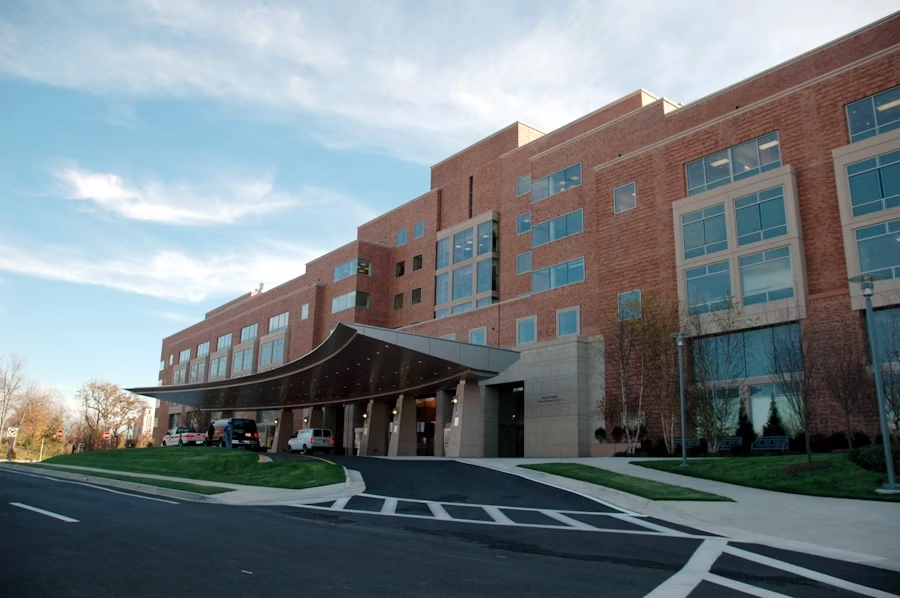
Hospitals and health systems

Medical groups and multi-site practices

FQHCs and community health centers

Behavioral health organizations

Specialty and ambulatory practices

Laboratories and imaging organizations

Healthcare payers, TPAs, and MSOs

Health information exchanges

Public health organizations

Life sciences organizations

Digital health companies

Healthcare SaaS vendors
Why Healthcare Organizations Choose CapMinds?
18+ Years in Healthcare Technology
Bring proven healthcare technology experience to complex decisions, workflows, risks, and long-term transformation goals confidently.

1300+ Completed Projects
Apply lessons from 1300+ completed projects to improve planning, execution, problem-solving, and delivery confidence consistently.
Trusted by 400+ Healthcare Organizations
Partner with a healthcare technology team trusted by 400+ organizations for accountable, dependable project delivery.
Scalable Migration Delivery
Start with one workload, refine the process, then scale proven migration waves as complexity, volume, and timelines increase.
Healthcare Migration Assurance
Move each workload through testing and validation, then transition users, data, and workflows only after readiness is confirmed.
Post-Migration Cost Optimization
Once workloads stabilize, use real production data to right-size resources, remove waste, and control ongoing cloud spending efficiently.

What Our Clients Say
Hear from healthcare leaders who’ve transformed their operations with our services & solution.
What Makes CapMinds as a Trusted Healthcare Cloud Migration Company
CapMinds combines healthcare migration expertise with controlled cutovers, rigorous validation, security-focused governance, and structured delivery. As a healthcare cloud infrastructure migration company, we help organizations move critical workloads while maintaining application, data, infrastructure, and workflow continuity.
HIPAA
COMPLIANCE

ISO 9001:2015
CERTIFIED

GDPR
COMPLIANT
SOC 2 TYPE 2
CERTIFIED

HL7 FHIR
STANDARDS

SNOMED CT
COMPATIBLE

HITRUST
ALIGNED
Technology and Integration Experience
Cloud Platforms and Migration Technologies
Amazon Web Services ➜

Microsoft Azure ➜

Google Cloud ➜
Migration Engineering ➜

Healthcare Applications ➜

Databases and Data Platforms ➜

Healthcare Interoperability ➜

Comparison Table
More Than an Infrastructure Migration Vendor
| Evaluation Area | Infrastructure Migration Vendor | Cloud Platform Partner | CapMinds Healthcare Cloud Migration |
|---|---|---|---|
| Primary focus | Moves infrastructure | Moves workloads to a preferred cloud | Protects healthcare applications, data, integrations, users, and workflows |
| Healthcare context | Usually limited | Depends on the assigned team | Clinical, patient, revenue, payer, imaging, and exchange workflows |
| Discovery scope | Servers and technical relationships | Platform workload assessment | Applications, databases, interfaces, identities, vendors, users, jobs, and workflows |
| Workload strategy | Commonly rehosting | Platform-led options | Retain, retire, replace, rehost, replatform, refactor, or redesign |
| Application migration | Infrastructure-dependent | Supported platform workloads | Clinical, financial, patient-facing, integration, and custom applications |
| Data validation | Confirms transfer completion | Platform-specific checks | Completeness, accuracy, relationships, reconciliation, meaning, and usability |
| Interoperability | Connectivity testing | Native integration services | HL7, FHIR, X12, DICOM, APIs, queues, mappings, certificates, and partners |
| Cutover planning | Infrastructure transition | Workload deployment | Workflow impact, downtime, communications, validation, rollback, and acceptance |
| Security | Platform configuration | Native cloud controls | ePHI handling, staging, access, logging, evidence, backup, and ownership |
| Production validation | Server availability | Workload health | Applications, data, interfaces, permissions, performance, recovery, and workflows |
| Source retirement | Customer-owned | Often outside scope | Dependency confirmation, retention, acceptance, and secure decommissioning |
| Post-migration | Technical handoff | Optimization options | Stabilization, rightsizing, cost review, security validation, and knowledge transfer |
Move Healthcare Workloads With Clear Accountability
Your migration should leave you with working applications, trusted data, connected systems, tested recovery, controlled spending, and a team ready to operate the new environment.
- Move the right workloads first
- Protect clinical and revenue operations
- Validate applications, data, and interfaces
- Maintain rehearsed rollback procedures
- Optimize performance and cloud costs
- Retire source systems safely
Frequently Asked Questions
What are healthcare cloud migration services?
Healthcare cloud migration services move applications, infrastructure, databases, data, and integrations from data centers, hosting providers, private environments, or other clouds into a target platform. The work also covers dependencies, security, validation, cutover, workflow continuity, stabilization, and source-system retirement.
Which healthcare workloads can be migrated?
Workloads can include EHR-connected applications, RCM systems, portals, telehealth, clinical applications, databases, interface engines, analytics platforms, virtual machines, containers, files, imaging workflows, and healthcare data platforms. Each workload should be assessed individually before migration approval.
Is a Business Associate Agreement required?
A BAA is generally required when a cloud provider creates, receives, maintains, or transmits ePHI on behalf of a covered entity or business associate. HHS also states that a provider maintaining encrypted ePHI remains a business associate even when it does not possess the decryption key.
Can CapMinds migrate healthcare interfaces?
Yes. CapMinds helps healthcare organizations migrate the interfaces. Migration can include interface engines, HL7 feeds, FHIR APIs, X12 transactions, DICOM workflows, message queues, mappings, certificates, endpoints, and trading partners. Connected sending and receiving systems should be included in testing and reconciliation.
What is included in a data center migration?
A data center migration may include asset discovery, dependency mapping, workload classification, network transition, licensing, backup preparation, server and data migration, cutover, recovery validation, facility exit, and secure decommissioning of retired equipment and storage.
How much does healthcare cloud migration cost?
Cost depends on workload volume, application complexity, data size, migration method, target platform, connectivity, testing, security controls, vendor coordination, cutover requirements, and stabilization scope. Reliable pricing requires discovery rather than a generic per-server estimate.
Does CapMinds support AWS, Azure, and Google Cloud?
Yes. CapMinds supports migrations to and between AWS, Microsoft Azure, Google Cloud, private cloud, hybrid environments, and on-premises infrastructure. The destination should follow workload compatibility, performance, security, connectivity, licensing, recovery, operating skills, and cost requirements.
Can healthcare applications be migrated without downtime?
Some applications can use replication, parallel environments, incremental synchronization, and controlled traffic transition to reduce or avoid downtime. Others require an approved maintenance window. The answer depends on architecture, data volume, interfaces, transaction activity, bandwidth, vendor restrictions, and rollback requirements.
How are applications validated after migration?
Testing can cover authentication, roles, workflows, interfaces, APIs, scheduled jobs, reports, files, databases, performance, backup, recovery, and user experience. The results are compared with agreed source baselines and production-acceptance criteria.
Can CapMinds provide Healthcare Cloud Migration Support?
Yes. CapMinds provides healthcare cloud migration support across migration planning, execution, validation, stabilization, and post-migration optimization. Support can address issue resolution, data reconciliation, application tuning, resource rightsizing, cost review, security validation, recovery testing, documentation, knowledge transfer, and approved source-system retirement.
How long does a healthcare cloud migration take?
A focused workload may take several weeks. A broader migration involving multiple facilities, applications, databases, vendors, integrations, and data centers may require several months or phased execution. Timing is determined after discovery, dependency mapping, data analysis, testing, and downtime planning.
What happens after migration?
Post-migration work can include issue resolution, data reconciliation, application tuning, resource rightsizing, cost review, security validation, recovery testing, documentation, knowledge transfer, and approved source-system retirement. Ongoing operations may remain internal or transition into a separately scoped managed service.
Resources
Insights for Healthcare Technology Teams.
AWS vs Azure for Medical Clinics – Full Comparison
The emergence of telehealth and the digitization of patient records have led to the shift of medical practices to the cloud. To the clinic IT directors and […]
How to Build a Cloud-Native EHR That’s HIPAA-Compliant and Scalable
Healthcare organizations are increasingly moving toward cloud-native EHR architectures to overcome the limitations of traditional on-premise systems. Legacy EHR platforms often struggle with scalability, interoperability, and infrastructure […]

Top 5 Simple Known and Unknown Technical Barriers of the Salesforce Health Cloud
Salesforce Health Cloud aims to provide a thorough and all-encompassing solution for providers to manage patient data, improve patient engagement, and streamline operations.