Healthcare Migration Services
Reduce Healthcare Migration Costs by 40% Without
Downtime or Data Loss
Move EHRs, applications, clinical data, interfaces, and infrastructure through a controlled migration that preserves usable records, keeps critical workflows connected, and prepares your teams for go-live.













Our Services
Control Every Stage of Your Healthcare Migration
Advanced Healthcare Migration Capabilities
Control the Details That Determine Migration Success
Migration Pipelines and Synchronization
Build repeatable ETL pipelines for bulk transfers, delta loads, continuous synchronization, exception handling, and migration monitoring.
Migration Strategy and Wave Planning
Select the right migration approach and sequence based on workload criticality, target readiness, data volume, and downtime tolerance.
Clinical Data Transformation and Identity Controls
Clean, map, normalize, and reconcile clinical data, terminology, patient identities, providers, facilities, and source lineage.
Migration Discovery and Risk Assessment
Map systems, dependencies, vendor constraints, data issues, and cutover risks before they affect migration cost or timing.
Document, Imaging, and Unstructured Data Migration
Move scanned records, documents, and diagnostic images while preserving patient association, metadata, accessibility, and quality.
Interoperability and External Exchange Migration
Transition HL7, FHIR, APIs, C-CDA, X12, HIE, registry, and proprietary integrations into the target environment.
Revenue Cycle Data Migration
Reconcile insurance, authorizations, charges, claims, payments, balances, work queues, and financial reports across both systems.
Analytics and AI Data Migration
Move governed healthcare data into warehouses, lakehouses, FHIR repositories, analytics platforms, and approved AI environments.
Migration Rehearsal, Reconciliation, and Validation
Test production-scale migration cycles and validate data completeness, accuracy, relationships, balances, documents, and dependent workflows.
Network Event Correlation
Group related device, circuit, wireless, cloud, and application-path events to reduce duplicate alerts and shorten investigation time.
Business Outcomes
Turn Healthcare Migration Into Long-Term Business Value
Case Studies
We’ve successfully implemented a range of solutions. See how healthcare organizations
like yours achieved measurable results with CapMinds.
End-to-End RCM Automation for UiPath Using a Custom EMR
- 100% automation of standard RCM processes
- 50% faster claim turnaround
- Zero errors in claim formatting and submission

Westside Behavioral Care with a Custom EMR Platform
- Centralized EMR with consolidated patient data.
- 100% paperless onboarding process
- 90% automation in scheduling and documentation

UDS Reporting for Ventura County Health Care Agency (VCHCA)
- Automated processing of 100,000+ records
- FHIR validation and HRSA mock submission in 10 weeks
- 100% HRSA compliance
Is Your Migration Plan Ready for Execution?
Walk us through your migration plan, dependencies, data, and deadlines. We’ll help identify what needs attention before execution begins.
Who Do We Serve?
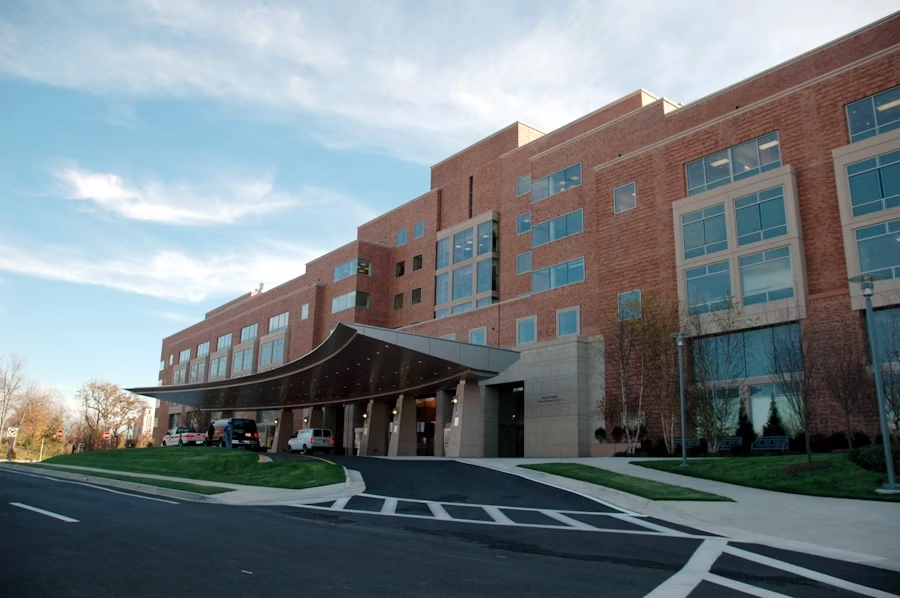
Hospitals & Health Systems
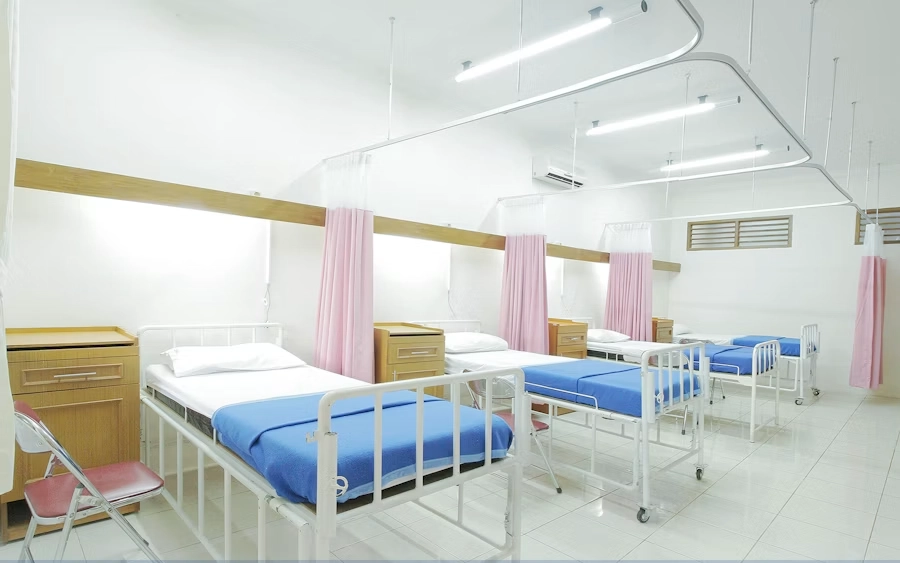
Medical Groups & Multi-Site Practices

FQHCs & Community Health Centers

Behavioral Health Organizations

Specialty & Ambulatory Organizations
Ambulatory Surgery Centers

Healthcare Payers & Health Plans

RCM & Medical Billing Companies

Digital Health & Healthcare SaaS Companies

Healthcare Software Vendors

Laboratories & Diagnostic Organizations

Home Health & Post-Acute Organizations
Why Healthcare Organizations Choose CapMinds?
18+ Years in Healthcare Technology
Bring proven healthcare technology experience to complex decisions, workflows, risks, and long-term transformation goals confidently.

1300+ Completed Projects
Apply lessons from 1300+ completed projects to improve planning, execution, problem-solving, and delivery confidence consistently.
Trusted by 400+ Healthcare Organizations
Partner with a healthcare technology team trusted by 400+ organizations for accountable, dependable project delivery.
Scalable Migration Delivery
Move from initial workloads to enterprise migration waves using repeatable methods that improve consistency as migration complexity increases.
Healthcare Data Integrity Assurance
Preserve patient identity, clinical meaning, relationships, and source context so migrated healthcare data remains trustworthy after transition.
Legacy System Retirement Expertise
Preserve required historical access first, then retire redundant technology after data, workflows, integrations, and retention obligations are resolved.

What Our Clients Say
Hear from healthcare leaders who’ve transformed their operations with our services & solution.
What Makes US a Trusted
Healthcare Migration Partner
CapMinds combines healthcare migration expertise with dependency-aware planning, rigorous data validation, controlled cutovers, and workflow-focused testing for reliable transitions.
HIPAA
COMPLIANCE

ISO 9001:2015
CERTIFIED

GDPR
COMPLIANT
SOC 2 TYPE 2
CERTIFIED

HL7 FHIR
STANDARDS
SNOMED CT
COMPATIBLE

HITRUST
ALIGNED
Technology and Integration Expertise
Technologies Selected Around Your Migration Environment
Enterprise EHR Platforms ➜

Healthcare Applications ➜

Enterprise Business Systems ➜
Healthcare Interoperability ➜

Interface and Integration Platforms ➜

Clinical Terminologies ➜

Data Migration and ETL ➜

Move Healthcare Systems Without Moving Risk Into Production
Build a migration program around the data, applications, interfaces, workflows, users, and business functions your organization cannot afford to lose during transition.
- Define the complete migration scope
- Identify hidden dependencies
- Clean and map healthcare data
- Preserve clinical and financial context
- Validate information before cutover
- Rebuild critical interfaces
- Prepare users and support teams
- Maintain access to historical records
- Retire legacy technology responsibly
- Measure value beyond technical completion
Frequently Asked Questions
Can CapMinds support a migration to Epic?
Yes. CapMinds does support Epic Migration. The project depends on scope, support can include discovery, data profiling, mapping, clinical and financial conversion, master-data alignment, interfaces, mock migrations, reconciliation, cutover, training, go-live, and archival planning. Responsibilities must be coordinated with your Epic team, implementation partner, source-system vendors, and internal clinical and operational owners.
Can CapMinds support a Cerner-to-Epic migration?
Yes. CapMinds can support cerner to epic migration. A Cerner-to-Epic transition may include Oracle Health source analysis, clinical and financial data conversion, identifier matching, local-code normalization, document migration, interface transition, rehearsal cycles, reconciliation, cutover, and hypercare. The exact approach depends on the Millennium environment, Epic build, source access, vendor participation, and approved conversion scope.
Can CapMinds migrate healthcare applications to the cloud?
Yes. CapMinds does help to migrate healthcare applications to the cloud. Project scope can include application discovery, dependency mapping, databases, interfaces, storage, identity, networking, security, deployment processes, monitoring, backup, cutover, and validation. Each workload may be rehosted, replatformed, refactored, rebuilt, replaced, retained, archived, or retired based on business value, technical fit, risk, and cost.
How long does a healthcare migration take?
A bounded application or ambulatory EHR migration may take 6 to 12 Months. A multi-hospital EHR replacement, enterprise consolidation, or multi-platform migration may require a longer, phased program which might take 12 to 18 Months. Timing depends on source access, data quality, record volume, applications, interfaces, target readiness, vendor schedules, validation, training, and cutover complexity.
Can CapMinds work with our EHR vendor and implementation partner?
Yes. CapMinds can own agreed migration workstreams or work alongside your EHR vendor, implementation partner, archive provider, cloud provider, application vendors, internal IT team, clinicians, HIM, compliance, security, and revenue-cycle leadership. Responsibilities, decisions, dependencies, deliverables, and escalation paths should be established before execution.
Can CapMinds support an Epic Community Connect migration?
Yes. CapMinds does support Epic community connect migration. The engagement may support affiliated practices or physician groups joining a health system’s Epic Community Connect environment. The scope can include source-system discovery, patient and provider alignment, data conversion, interface transition, historical archiving, repeatable onboarding waves, validation, training, cutover, and post-launch support.
Can applications and data be migrated at different times?
Yes, but the organization must define how source and target environments will remain aligned during the interim period. Temporary interfaces, replication, scheduled synchronization, dual entry, delta loads, read-only access, or phased cutover may be required. Each temporary arrangement needs a clear owner and exit date.
How does CapMinds support migration go-live?
CapMinds Migration Go-live support may include command-center coordination, user and access assistance, data monitoring, interface monitoring, workflow triage, vendor escalation, defect prioritization, reconciliation, daily reporting, and hypercare. The support model is aligned to the facilities, applications, user groups, operating hours, and technical scope involved.
How much do healthcare migration services cost?
Healthcare migration costs vary widely by scope. Approximately, the healthcare migration cost may vary from 80,000–300,000+, while complex hospital or enterprise programs can cost substantially more. Cost depends on the number and complexity of source systems, data domains and historical depth, record and document volume, source-system accessibility, cleansing and mapping complexity, applications and interfaces, archive requirements, target-platform requirements, validation expectations, facilities and user groups, go-live support, and legacy decommissioning. A reliable estimate requires discovery and a defined migration scope rather than a generic per-record price.
What happens after migration is complete?
Post-migration work may include reconciliation, defect remediation, workflow optimization, interface stabilization, archive support, performance tuning, user support, documentation, knowledge transfer, cost optimization, and legacy-system retirement. Migration should close only after technical completion has become an accepted and supportable operational state.
Resources
Insights for Healthcare Technology Teams.
How to Migrate from Azure API for FHIR to Azure Health Data Services
What happens if a production FHIR endpoint is still serving your healthcare applications on October 1, 2026? That is no longer a theoretical migration-planning question. Microsoft is […]