Healthcare IT Budgeting: Where to Invest and What to Avoid
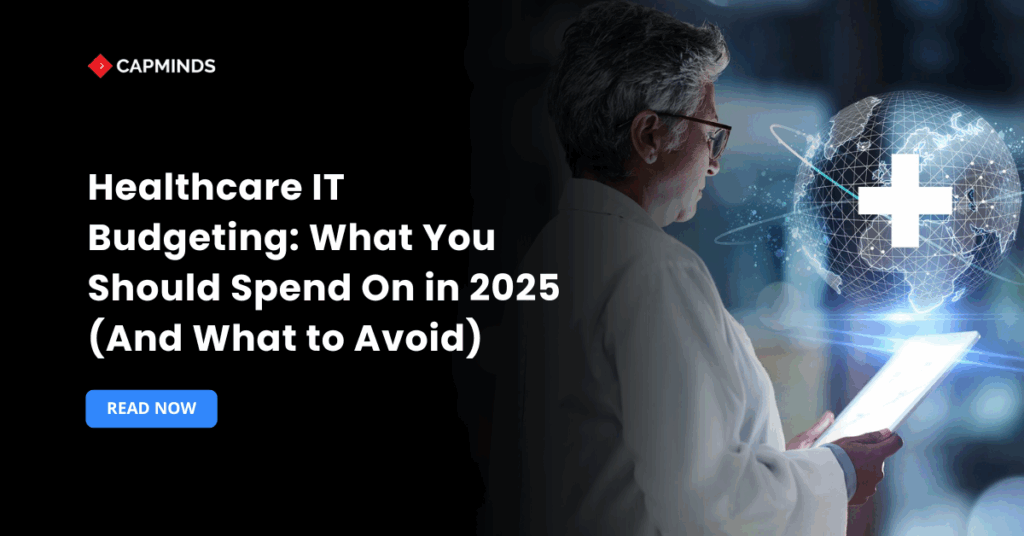
In 2026, healthcare IT budgeting will be critical. With global IT investment expected to exceed $350 billion, healthcare organizations face increasing pressure, including increased cybersecurity concerns, the rapid expansion of telemedicine, and severe regulatory requirements. Strategic investments in areas such as AI-powered diagnostics, cloud infrastructure, and strong cybersecurity measures are critical for improving patient care and operational efficiency.
On the other hand, providing funding to old legacy systems or non-scalable solutions may hinder growth and waste vital resources. This guide goes into the major areas where your IT budget should be concentrated in 2026, highlighting expenses that may no longer provide a worthwhile return.
How Much Should Healthcare Organizations Spend on IT?
There is no single percentage that works for every healthcare organization. As a reference point, estimated IT expenses represented approximately 2.3% of total operating expenses for U.S. hospitals in 2024.
An appropriate hospital IT budget depends on organizational size, clinical complexity, technology maturity, cybersecurity exposure, growth plans, and current healthcare spending trends.
Healthcare leaders should adjust their budget around:
- Size & location of organization: Hospitals, health systems, specialty groups, and outpatient practices will have varying infrastructure requirements.
- Current technology debt: Legacy servers, unsupported applications, and custom interfaces can add up costs of maintenance.
- Time constraint: The need for ongoing funding for identity security, endpoint protection, backups, monitoring, incident response and workforce training poses a challenge for cybersecurity.
- EHR and interoperability requirements: Plan for optimization, interfaces and APIs, terminology management, data migration, and continuous vendor support.
- Additional investment could be needed for strategic growth plans involving new facilities, service lines, acquisitions, virtual care programs and value-based care contracts.
- Operating and capital costs: Distinguish between software, cloud, support, and staffing costs that occur regularly from large IT implementations and infrastructure.
- Contingency reserves: Keep funds available to cover any sudden threats to security, system failures, changes in regulations, and extra costs from vendors.
Organizations should start with industry benchmarks and work towards them, but not aim for them. An effective healthcare IT budgeting strategy aligns all technology costs with patient safety, operational efficiencies, compliance, revenue protection and growth.
Healthcare Budget Planning Framework for CIOs and CFOs
The CIO and CFO should create the technology budget together instead of treating IT as a separate technical line item. A shared healthcare budgeting strategy enables leadership to balance financial constraints with clinical needs, cybersecurity requirements, digital transformation priorities, and changing healthcare spending trends.
A practical planning framework includes:
1. Establish the Current Cost Baseline
Document existing expenses for software licenses, cloud services, hardware, interfaces, cybersecurity, vendor support, telecommunications, staffing, and managed services. Include contracts that renew automatically and costs distributed across clinical departments.
2. Separate Mandatory and Strategic Spending
Classify investments into three categories:
Run: Maintain essential systems, networks, EHR platforms, devices, and support.
Protect: Fund cybersecurity, compliance, backups, disaster recovery, and business continuity.
Grow: Support analytics, AI, automation, interoperability, patient engagement, and service-line expansion.
3. Prioritize Investments Using Business Impact
Score each proposed investment based on:
- Patient safety and clinical impact
- Regulatory or cybersecurity urgency
- Expected operational savings
- Revenue improvement or protection
- Staff productivity
- Implementation complexity
- Technology dependencies
- Time to measurable value
4. Calculate the Full Cost of Ownership
Include implementation, integration, data migration, training, customization, security, maintenance, upgrades, support, and contract-exit costs. The lowest initial price may not produce the lowest long-term cost.
5. Apply Appropriate Capital Budgeting Methods
Common healthcare capital budgeting methods include net present value, return on investment, payback period, internal rate of return, and weighted scoring models.
Healthcare technology decisions should combine these financial measures with clinical, compliance, cybersecurity, and operational considerations.
6. Monitor and Reforecast
Track spending against budgets and project results on financial dashboards or healthcare budgeting software to adjust your budget when business changes. Quarterly reviews enable planning and budgeting in healthcare to be more responsive than an annual exercise in budgeting
Why Strategic Healthcare IT Budgeting Matters
Strategic HealthIT budgeting is more than just listing expected costs for software, hardware, and support. It’s a process of estimating revenues and expenses and deliberately aligning those numbers with your organization’s mission and priorities.
Budgeting in healthcare involves allocating funding not only for day‑to‑day operations but also for capital investments like new clinical systems or infrastructure upgrades, all in service of long‑term goals.
As a management planning and control tool, a well‑constructed budget helps leaders coordinate activities across departments, monitor spending in real time, and make adjustments before small overruns become big problems.
- When budgets are tied to strategic objectives, such as improving patient satisfaction or expanding service lines, you ensure that every tech purchase moves the organization forward.
- Smart budgeting helps you prioritize the highest‑impact projects, like automating routine tasks or optimizing data workflows.
- Healthcare is highly regulated. A strategic financial plan builds in funds for security updates, regulatory reporting tools, and staff training.
Key benefits of Strategis Health IT Budgeting include:
- You only fund projects that directly support your mission.
- Real‑time budget tracking lets you reallocate funds quickly when priorities shift.
- Properly funded IT systems translate to fewer delays, safer data handling, and improved clinical workflows.
- Early warning systems in your budget flag overruns before they exceed.
Healthcare IT Budget Trends and Spending Benchmarks
The global healthcare IT market is expected to be worth $231.2 billion by 2026, with a large percentage of the investment going toward digital transformation, cybersecurity, and value-based care models.
Overall, IT costs are likely to rise, with a heavy emphasis on leveraging technology to increase efficiency, improve patient experience, and reduce risks.
Top Healthcare IT Investment Priorities
Cybersecurity & Cyber Resilience
The HealthIT industry’s cybersecurity budget goals for 2026 are probably going to prioritize investments in cloud security, AI-powered threat detection, and cyber resilience.
To improve threat detection and response, healthcare companies should integrate AI and concentrate on improving their capacity to recover swiftly from cyber events. Furthermore, cloud security solutions will be essential, such as cloud workload protection platforms and cloud access security brokers.
- Organizations should concentrate on developing strong cyber resilience policies that go beyond protecting against attacks to guarantee business continuity and quick recovery in the event of an incident.
- Invest in AI-powered security systems that can identify new risks, automate response steps, and analyze massive datasets quickly.
- As cloud usage keeps increasing, give priority to cloud security solutions such as CASB, CWPP, and cloud security posture management.
- Use threat intelligence tools to obtain practical knowledge about the patterns and weaknesses of worldwide cyberattacks.
- Use more robust authentication techniques, including biometrics or behavioral patterns, in place of conventional passwords.
Cloud Migration & Infrastructure Modernization
The HealthIT budget is anticipated to prioritize cloud migration and infrastructure modernization in 2026, with an emphasis on data management, security, and utilizing cloud capabilities for innovation.
In particular, this entails improving cybersecurity, updating infrastructure to accommodate growing data volumes, and investigating AI and automation to boost productivity and patient experience.
Analytics & Value‑Based Care Infrastructure
For 2026, expect key Health IT budget priorities to center on Analytics and Value-Based Care Infrastructure.
- Investments will boost productivity, prioritise data interoperability for a unified picture, improve clinical decisions with AI, assist population health management, and improve patient outcomes through insights (early detection, personalised treatment).
- The technology that supports care coordination, performance monitoring, patient involvement (telehealth, RPM), and general IT systems that enable value-based arrangements will be the main focus of the shift away from fee-for-service.
In the end, value-based care models highlight the use of data insights to enhance care quality and outcomes while efficiently controlling costs.
AI & Machine Learning
AI and generative AI are seeing the biggest increases in IT spending in 2026 as businesses look for strategic growth prospects. Meanwhile, more money is being squeezed out of more established categories like server infrastructure and device management.
Higher adoption rates in 2026 will result from healthcare leaders moving beyond proof-of-concepts to implement AI technologies with demonstrated business value, such as chart summaries and ambient listening for documentation.
Legislative impetus toward further AI integration in medical practice is shown in the Healthy Technology Act of 2026, which was introduced in Congress and would allow FDA-approved AI and ML systems to be considered prescribing practitioners.
Some of the key use cases of AI & Machine Learning include:
- Real-time recording and analysis of patient-provider talks is possible with AI-powered ambient listening solutions. This aids in the automation of medical records.
- The interpretation of MRIs, CT scans, ECGs, and other medical imaging is improved and accelerated by machine learning algorithms. to reduce the cost per patient and obtain more precise diagnostics and early disease detection.
- Pre-payment checks are replacing post-payment audits in claims review due to machine learning-driven predictive analytics.
- Over the next five years, it is estimated that RPA, an AI-enabled automation strategy, could save the global healthcare industry $200–$360 billion by automating repetitive operations, including EHR data entry, claims processing, and appointment scheduling.
Interoperability & EHR Optimization
In 2026, U.S. healthcare organizations are focusing their technology budgets on making systems work better together and improving how Electronic Health Records are used.
- Interoperability refers to the ease with which various software programs, hospitals, and health systems may communicate with one another. For instance, a patient’s medical records can be retrieved without faxing or having to enter everything again if they see a specialist in a different state.
- EHR optimization is the process of making EHRs faster, simpler to use, and more beneficial for patient care for healthcare professionals. This entails cutting down on clicks, enhancing user interfaces, and ensuring that physicians spend more time with patients and less time on computers.
Why has Health Interoperability and EHR optimization become a priority?
Because better-connected systems and smarter EHRs lead to:
- Fewer errors
- Better patient care
- Reduced costs
- Less burnout for healthcare staff
Patient Engagement & Telehealth Platforms
Since 2020, more than half of American citizens have experienced telehealth, and 89% say they are satisfied, so providers need to stay up to date. Through 2030, the U.S. market for patient engagement solutions is expected to expand by almost 20% a year, reaching around $22.4 billion.
The extended telehealth flexibilities offered by Medicare expire on September 30, 2026, but many waivers expire shortly after, necessitating immediate expenditures to lock in workflows and platforms.
Congress has been asked by over 350 organizations to permanently expand telehealth, emphasizing its vital role in equity and access.
- Through early intervention, virtual consultations can lower needless emergency room visits and overhead (facility expenditures, manpower).
- Clinicians can concentrate on patient care by streamlining workflows, reducing claim denials, and integrating telehealth and engagement tools with EHRs.
Quicker interventions and fewer missed visits result from easier access to care, particularly for those living in rural areas or with poor mobility.
Financial resilience in the face of shrinking margins is supported by improved chronic disease management, higher patient satisfaction ratings, and new revenue streams from virtual services.
Areas to Avoid Overspending in 2026
By avoiding frequent expenditure traps, U.S. healthcare institutions can save a large amount of money in 2026: spending a lot of money on outdated on-premises systems that don’t yield quantifiable results, chasing every new technology without any obvious advantages, ignoring the need of change management and employee training, depending on human processes rather than automation, and sacrificing risk governance.
Legacy Systems That Drain Healthcare IT Budgets
Older hardware and software configurations located in a company’s facilities, as opposed to the cloud, are known as legacy on-premises systems. Even if these systems no longer satisfy present requirements, they frequently need ongoing upkeep, updates, and a committed IT team.
Avoid Investing in Technology Without Measurable ROI
“Shiny” technologies are the newest, trendy tools that sound interesting but have no demonstrated use in daily operations, such as blockchain prototypes or AI-driven diagnostics.
Although investing extensively in these innovations before they mature can result in inflated costs without generating efficiencies, they can eventually improve care.
Hidden Cost of Manual Healthcare Workflows
Paper forms and human-entered claims processing are examples of manual workflows that are labor-intensive, slow, and prone to errors. A typical hospital’s annual administrative wages can total over $300,000, with each manual claim requiring 15 minutes of staff time.
Organizations may drastically cut processing times and errors by automating operations like claims preparation, coding, and payment posting. Research indicates that automation can reduce these expenses by up to 70%, saving hundreds of thousands of dollars annually.
Why Risk Governance Deserves a Larger IT Budget
To manage hazards, including data breaches, noncompliance, and technological malfunctions, risk governance entails establishing policies, supervision, and monitoring. Organizations are at risk when they underinvest in this area, especially when AI and other cutting-edge tools become more widely used.
How to Build a Healthcare IT Budget That Supports Long-Term Growth
An IT budget for growth shouldn’t be used just to fund the next software acquisition. It should establish a scalable technology bedrock for the organization to expand with more locations, providers, service lines, data sources, and digital-care programs without having to build the foundations of the enterprise structure and processes anew.
Healthcare organizations should:
- Create a three-year technology roadmap: Separate immediate operational needs, medium-term modernization projects, and long-term growth initiatives.
- Fund foundational capabilities first: Prioritize cybersecurity, identity management, networks, data governance, interoperability, backups, and disaster recovery.
- Optimize before replacing: Improve workflows, system configuration, integrations, templates, and staff training before purchasing a new EHR.
- Plan cloud costs carefully: Include subscriptions, storage, security, monitoring, connectivity, support, and data-migration expenses.
- Budget for continuous EHR optimization: Allocate ongoing funds for workflow improvements, updates, testing, interface maintenance, and user support.
- Invest in interoperability: Use standardized APIs and interface governance to reduce duplicate connections and long-term integration costs.
- Include workforce and change management: Budget for project leadership, clinician involvement, training, adoption support, and post-launch assistance.
- Measure outcomes: Track downtime, clinician time, claim denials, support requests, security risks, operating costs, and ROI.
Healthcare IT Spending Mistakes to Avoid 2026
As you plan your 2026 healthcare IT budget, choosing the right technology investments is key to long-term success. CapMinds helps healthcare organizations focus on what truly matters: smarter systems, seamless workflows, and sustainable growth.
Here’s what you should invest in and how we help:
- Custom EHR Solutions – Streamline documentation and align with your clinical goals.
- Interoperability & Integration – Avoid fragmented systems with secure, scalable data exchange.
- Telehealth Platforms – Support hybrid care models and boost patient engagement affordably.
- Healthcare Analytics – Turn your data into actionable insights that guide better decisions.
- Revenue Cycle Optimization – Improve billing accuracy and increase financial returns.
Why CapMinds?
We help you avoid overspending on unnecessary tech and guide your investments toward scalable, compliance-ready solutions.
With our consulting expertise, automation tools, and healthcare IT insight, you’ll be equipped to make budget-friendly choices that drive clinical and operational excellence.
Let CapMinds be your partner in smart healthcare IT planning for 2026. Contact us today to get started.
Frequently Asked Questions
1. How much should a healthcare organization allocate to its IT budget?
There is no universal allocation for every organization. Estimated U.S. hospital IT expenses averaged about 2.3% of total operating expenses in 2024, but this should be treated as a benchmark rather than a target. Organizations should adjust spending based on size, risk exposure, existing infrastructure, strategic projects, and regulatory obligations.
2. What percentage of a hospital IT budget should be spent on cybersecurity?
There is no mandatory percentage. The survey results from HIMSS reveal that there is a wide range of allocations to cybersecurity, with some respondents indicating that budgets are between 3% and 10% of their IT budgets, while others allocate over 10%. The correct quantity should be determined based on the risk assessment, criticality of the system, vulnerabilities, personnel required and recovery needs.
3. How can healthcare leaders prioritize technology investments with limited budgets?
Begin with investments that ensure patient safety, operation and compliance with regulations, or to mitigate key cybersecurity risks. Then, assess projects in terms of measurable financial and operational value and prioritize them.
Be sure to take into account implementation requirements, overall cost of ownership, staff capacity, workflow impact and projected timeline for benefits when approving lower priority innovation projects.
4. What are the biggest healthcare IT spending mistakes organizations make?
Typical pitfalls are renewing used systems without thinking through whether they actually need to be renewed, buying individual technologies without an integration strategy, spending money on technology without investing in training, and calculating only capital costs.
Redundant apps, lack of recurring cloud costs, unchecked projects lacking performance metrics and underfunding cybersecurity lead to a loss of value for organizations.
5. How do cloud migration and EHR optimization impact healthcare IT budgets?
A typical outcome of cloud migration is a change in expenditure from capital expenditure to operating expenses. This can save on hardware and maintenance, but includes subscription, connectivity, security, storage, and monitoring. Optimizing the EHR results in continuous expenses for workflow redesign, configuration, interfaces, training and testing, and yet can enhance the usability and value of existing technology.