$1M Healthcare IT Budget Planning Guide (With Template)
Healthcare organizations are increasing IT investments to support digital transformation, cybersecurity, interoperability, and value-based care. A well-structured healthcare IT budget helps leaders allocate funds across core systems, modernization initiatives, and risk-reduction priorities without losing control of operational costs.
This guide provides a practical framework for hospital IT budget planning, including key spending categories, a $1 million budgeting structure, prioritization methods, and a monitoring approach for the full year. It is designed to help healthcare leaders make smarter IT investment decisions with stronger financial and operational outcomes.
Key Takeaways
- Healthcare IT budgeting should balance operations, modernization, compliance, and risk management, not just technology purchases.
- A strong budget plan starts with strategic goals and a current-state assessment, then moves into forecasting, prioritization, and approvals.
- Hospitals should separate IT spending into OpEx, CapEx, and Project budgets to improve forecasting, governance, and ROI tracking.
- Hidden costs like data migration, integration maintenance, retraining, and go-live support are common reasons healthcare IT budgets go over plan.
- The best IT budgets are monitored and adjusted throughout the year using financial, operational, security, and outcome-based KPIs.
What is Budget Planning for Healthcare IT?
Healthcare IT budget planning is the process of allocating financial resources for technology infrastructure, software, staffing, cybersecurity, and IT projects in a healthcare organization. It helps align IT spending with patient care goals, compliance requirements, and operational performance.
A strong healthcare IT budget aligns investments with patient care needs, compliance requirements, operational efficiency, and financial performance. It also helps organizations prioritize high-impact initiatives, manage risk, and avoid unplanned IT spending.
Why is Budgeting Essential in Healthcare IT?
Healthcare IT budgeting is essential because it helps organizations allocate resources to the systems that support patient care, operational continuity, compliance, and financial performance. A structured budget reduces unplanned spending, improves decision-making, and ensures that critical IT investments are funded on time.
It also helps healthcare organizations balance day-to-day operations (EHRs, support, cybersecurity, maintenance) with long-term modernization goals such as interoperability, analytics, telehealth, and automation. With a clear budget plan, leaders can prioritize high-impact initiatives, track ROI, and maintain long-term financial stability.
7 Steps for IT Healthcare Budget Planning
1. Define Strategic Goals
Start by identifying the organization’s clinical, operational, and financial goals, and define how IT will support them. This includes understanding the needs of clinical teams, administrative departments, and patient services, as well as the expected impact on care quality, efficiency, and revenue performance.
2. Review Current IT Infrastructure
Assess the current IT environment to understand existing systems, contracts, assets, and spending allocation. Identify performance gaps, underutilized tools, rising cost areas, and systems that may require upgrades or replacement.
3. Forecast Future IT Needs
Estimate future IT requirements based on patient volume, growth plans, new projects, technology updates, and industry trends. Include expected investments in EHR/EMR upgrades, telehealth, RPM, analytics, AI, and cybersecurity.
4. Develop a Comprehensive Budget Plan
Develop a detailed budget covering all major IT spending categories, including hardware, software, infrastructure, cybersecurity, staffing, maintenance, and support. Compare vendors, pricing models, and implementation requirements to develop a cost-effective and scalable plan.
5. Review and Prioritize
Review the proposed budget with key stakeholders to ensure alignment with organizational goals. Evaluate expected ROI and prioritize projects based on risk, compliance needs, and clinical/operational impact.
6. Obtain Approval
Finalize the budget with clearly assigned funds across IT categories and initiatives. Present the plan to decision-makers with budget assumptions, priorities, and expected outcomes to obtain formal approval.
7. Monitor and Adjust
Regularly track IT expenditures against the approved budget and implement changes as required during the budgeting timeframe. This includes monitoring actual expenses, recognizing variances, and implementing required adjustments to the budget. Consistently review the budget, solicit user feedback, and adapt it to reflect changing IT requirements.
By taking these steps, healthcare companies can create a practical and effective IT budget that aligns with their strategic objectives and ensures that IT investments are used properly.
Related: Healthcare IT Budgeting: What You Should Spend On in 2025 (And What to Avoid)
Key Elements for a $1 Million Healthcare IT Budget
A $1 million healthcare IT budget should be distributed across core categories that support operations, compliance, modernization, and resilience. The exact allocation will vary by organization type, size, and digital maturity, but the following categories are typically essential.
1. Infrastructure & Hardware
Servers for storing physical or cloud-based patient records and databases. Equipment such as routers, switches, and firewalls for secure network connectivity. Devices for working purposes, such as laptops, tablets, and desktop systems; network-attached storage and storage area networks for cloud backups; and printers and scanners for handling documents in hospitals.
Investing in hardware is crucial since it supports daily operations and clinical processes. Regular upgrades and refresh cycles help prevent performance issues and downtime. These systems form the foundation for stable EHR/EMR performance and clinical operations.
2. Software Licensing
Epic, Cerner, athenaHealth, and various other vendors offer EHR/EMR software solutions. This category may also include practice management technologies such as appointment scheduling, billing, and claims processing. Microsoft 365, Google Workspace, and other needed software are examples of productivity aids. SQL servers and data analytics systems require database licenses.
From patient engagement to backend reporting, software handles it all. Licensing ensures legal use, access to updates, and vendor support. Make sure that systems are compliant and updated.
3. Cybersecurity
Firewalls and antivirus software must be installed on every system. This category should include multi-factor authentication, encryption, SIEM monitoring, testing, and audit logging.
Healthcare firms must employ cybersecurity solutions because healthcare data breaches are serious. HIPAA and other data restrictions protect patient information. Effective security measures reduce the legal penalties.
4. Staffing & Outsourcing
Staff budgeting includes costs for IT administrators, data analysts, internal and external IT staff, cloud migration consultants, EHR specialists, and training resources. Skilled staff need to manage systems, respond to incidents, and plan for improvements. Training provides staff with the ability to stay updated with evolving technology.
5. Software Applications
Healthcare organizations require digital transformation, such as telehealth platforms, mobile apps, patient portal software, interoperability, and API solutions. IoT devices include wearables such as heart rate monitors and blood pressure monitors.
Data analytics includes artificial intelligence and machine learning for accurate diagnosis and patient care. These applications drive efficiency and better patient outcomes. They support modern healthcare trends like remote patient monitoring.
6. Maintenance & Upgrades
Healthcare organizations should budget for hardware repairs or replacements, software version upgrades, service agreements, and warranty extensions.
This helps prevent avoidable downtime, reduces failure risk, and supports ongoing compliance and system compatibility. Regular maintenance also extends the useful life of IT assets.
7. Contingency & Emergency Fund
Unexpected expenses may include emergency cybersecurity remediation, sudden regulatory changes, urgent replacements, and unplanned technology needs. A contingency fund helps healthcare organizations respond quickly without delaying critical clinical or operational workflows.
Operating vs Capital vs Project IT Budget (Healthcare)
Healthcare IT budgeting works best when you split spending into Operating (run costs), Capital (long-life assets), and Project (transformation initiatives). This makes approvals easier, improves ROI tracking, and prevents overspending on recurring tools while underfunding modernization.
| Budget Type | What It Covers | Typical Healthcare IT Examples | Why It Matters |
| Operating IT Budget (OpEx) | Recurring costs to run daily IT operations | EHR subscriptions, cloud hosting, cybersecurity tools, IT support, software maintenance, backup services | Keeps systems available, secure, and compliant every day |
| Capital IT Budget (CapEx) | Large investments with multi-year value | Servers, firewalls, network upgrades, clinical devices, storage systems, infrastructure refresh | Supports modernization and long-term capacity planning |
| Project IT Budget | Time-bound initiatives with scope and milestones | EHR migration, interoperability/FHIR integration, telehealth rollout, analytics implementation, portal upgrades | Funds strategic change and measurable business outcomes |
Hidden Costs Most Healthcare IT Budgets Miss
Many healthcare IT budgets cover the obvious costs (hardware, software, staffing) but miss the execution costs needed to make systems work in real operations. These hidden expenses usually appear during implementation, go-live, renewals, or audits and cause budget overruns.
1. Data Migration and Data Cleanup
Migration costs are often underestimated because legacy data needs mapping, validation, and cleanup before go-live. This includes duplicate records, format mismatches, and retesting after corrections.
2. Integration and Interface Maintenance
Teams budget for the initial integration build but miss ongoing maintenance costs. APIs, mappings, and interfaces need monitoring, troubleshooting, and retesting after upgrades.
3. Training, Retraining, and Change Management
Initial training is not enough in healthcare IT. New hires, software updates, and workflow changes require repeat training, super-user support, and updated SOPs.
4. Go-Live Support and Temporary Productivity Loss
Go-live periods usually require overtime, extended help desk coverage, vendor support, and temporary backfill. Productivity often dips for a short period, which should be planned in the budget.
5. Cybersecurity Incident Readiness (Beyond Tools)
Buying firewalls and antivirus software is only part of cybersecurity budgeting. Hospitals also need incident response readiness, drills, recovery testing, and log retention to reduce outage and compliance impact.
6. Compliance and Audit Preparation Costs
Compliance costs include recurring documentation, access reviews, risk assessments, and evidence collection, not just software tools. These process-heavy tasks consume internal time and often require consulting support.
7. Vendor Renewal Escalations and Contract Surprises
Renewal costs can increase due to user growth, module additions, support upgrades, storage overages, or interface fees. Forecasting these uplifts prevents mid-year budget gaps.
8. Hardware Lifecycle and End-of-Life Replacements
Reactive device replacement is more expensive than lifecycle-based planning. Aging desktops, tablets, and unsupported systems can trigger emergency purchases and workflow disruption.
9. Backup, Disaster Recovery, and Recovery Testing
Many organizations budget for backup tools but not for restore testing and failover validation. Recovery testing is essential to confirm systems can be restored within acceptable downtime targets.
10. Hidden Internal Labor Costs
Internal effort from IT, clinical leaders, billing teams, and compliance staff is a real project cost. If not tracked, total cost and ROI calculations become inaccurate.
How to Prioritize IT Investments (Risk, ROI, Compliance, Clinical Impact)
Healthcare IT budgets are limited, so every investment should be prioritized using a clear framework, not based on urgency alone. The best approach is to score each initiative by risk reduction, ROI, compliance impact, and clinical/operational value.
| Priority Factor | What to Evaluate | Why It Matters in Healthcare |
| Risk Reduction | Downtime risk, cyber risk, patient safety risk, vendor support risk | Prevents disruptions, data loss, and operational failures |
| ROI / Financial Impact | Revenue uplift, denial reduction, cost savings, productivity gain | Helps justify spending to the CFO/finance leadership |
| Compliance Impact | HIPAA/security requirements, audit readiness, data protection | Reduces regulatory exposure and remediation costs |
| Clinical Impact | Care quality, clinician efficiency, and documentation accuracy | Connects IT spend to patient care and care delivery performance |
| Operational Impact | Throughput, scheduling, billing workflows, and staff burden | Improves day-to-day performance and service continuity |
| Strategic Fit | Alignment with growth, VBC, and digital transformation goals | Ensures budget supports long-term business direction |
Budget Monitoring Dashboard (Monthly/Quarterly KPIs)
A healthcare IT budget should be tracked throughout the year, not reviewed only during annual planning. A simple monthly and quarterly dashboard helps teams monitor spending, project progress, system performance, and risk so they can make timely adjustments.
Monthly KPIs (Track regularly)
- Budget vs Actual (by category): Compare planned vs actual spend for software, hardware, cybersecurity, staffing, and projects.
- Forecast Variance: Check if current spending trends may cause overages by quarter-end or year-end.
- Project Status: Track milestone progress, budget used, and scope changes for active IT initiatives.
- System Reliability: Monitor uptime, incidents, and response/resolution trends for critical systems.
- Cybersecurity Hygiene: Review patch compliance, vulnerability backlog, and key security alerts.
Quarterly KPIs (Review for strategy and correction)
- ROI / Outcome Review: Assess whether major IT investments are improving efficiency, workflows, revenue performance, or patient access.
- Budget Reforecasting: Adjust category allocations based on renewals, project delays, or new priorities.
- Vendor Performance: Review support quality, SLA adherence, and contract value.
- Compliance Readiness: Check audit preparation status, access reviews, and security documentation updates.
- Priority Reassessment: Re-rank upcoming IT investments based on risk, ROI, compliance, and clinical impact.
Common Budgeting Mistakes to Avoid
Healthcare IT budgets often go off track when organizations budget only for technology purchases and not for the full cost of implementation, operations, and monitoring. Avoiding these mistakes improves budget accuracy and reduces mid-year surprises.
- Organizations often budget only for the technology purchase and overlook migration, integration, training, and go-live support costs.
- Mixing OpEx, CapEx, and project spending in one budget bucket makes forecasting and accountability difficult.
- Underestimating renewals, license growth, and usage-based costs can create mid-year budget gaps.
- Skipping hardware and infrastructure lifecycle planning increases the risk of emergency replacements and downtime.
- Not setting a contingency reserve makes the budget vulnerable to small scope changes and unexpected costs.
- Prioritizing investments based only on urgency can push critical risk-reduction and compliance initiatives down the list.
- Without KPI-based monitoring, overspending and project drift are often identified too late.
- Failing to track outcomes after implementation makes ROI difficult to prove and weakens next year’s planning.
Related: Avoiding Custom Software Mistakes That Drain IT Budgets
FAQ about Healthcare IT Budget Planning
1. How much should hospitals allocate to IT in 2026?
Most hospitals allocate 4% to 7% of total operating revenue to IT, depending on digital maturity and regulatory requirements. Organizations investing in interoperability, cybersecurity, and value-based care transformation may trend toward the higher end of that range.
2. What percentage of a healthcare IT budget should go to cybersecurity?
Healthcare organizations typically allocate 8% to 12% of the total IT budget to cybersecurity. This includes tools, monitoring, incident response readiness, audit preparation, and compliance activities to reduce breach and downtime risk.
3. How should a $1 million healthcare IT budget be structured?
A $1M healthcare IT budget should be divided across Operations (OpEx), Capital investments (CapEx), and Project initiatives. Balanced allocation ensures core systems stay stable while funding modernization efforts like interoperability, analytics, and telehealth.
4. What are the most common hidden costs in healthcare IT budgeting?
The most overlooked costs include data migration cleanup, interface maintenance, retraining, go-live support, vendor renewal escalations, and internal labor time. These execution-related expenses often cause mid-year budget overruns if not forecasted early.
5. How can healthcare leaders prioritize IT investments effectively?
Healthcare IT investments should be prioritized using a structured scoring model based on risk reduction, ROI impact, compliance requirements, clinical impact, and strategic alignment. This prevents urgency-based decisions and improves long-term financial control.
Make Smart IT Investments with CapMinds Healthcare IT Consulting
As you plan your 2026 healthcare IT budget, choosing the right technology investments is key to long-term success. CapMinds helps healthcare organizations focus on what truly matters: smarter systems, seamless workflows, and sustainable growth.
Here’s what you should invest in and how we help:
- Custom EHR Solutions – Streamline documentation and align with your clinical goals.
- Interoperability & Integration Services – Avoid fragmented systems with secure, scalable data exchange.
- Telehealth Platforms – Support hybrid care models and boost patient engagement affordably.
- Healthcare Analytics – Turn your data into actionable insights that guide better decisions.
- Revenue Cycle Optimization – Improve billing accuracy and increase financial returns.
Why CapMinds?
We help you avoid overspending on unnecessary tech and guide your investments toward scalable, compliance-ready solutions.
With our consulting expertise, automation tools, and healthcare IT insight, you’ll be equipped to make budget-friendly choices that drive clinical and operational excellence.
Let CapMinds be your partner in smart healthcare IT planning for 2026.
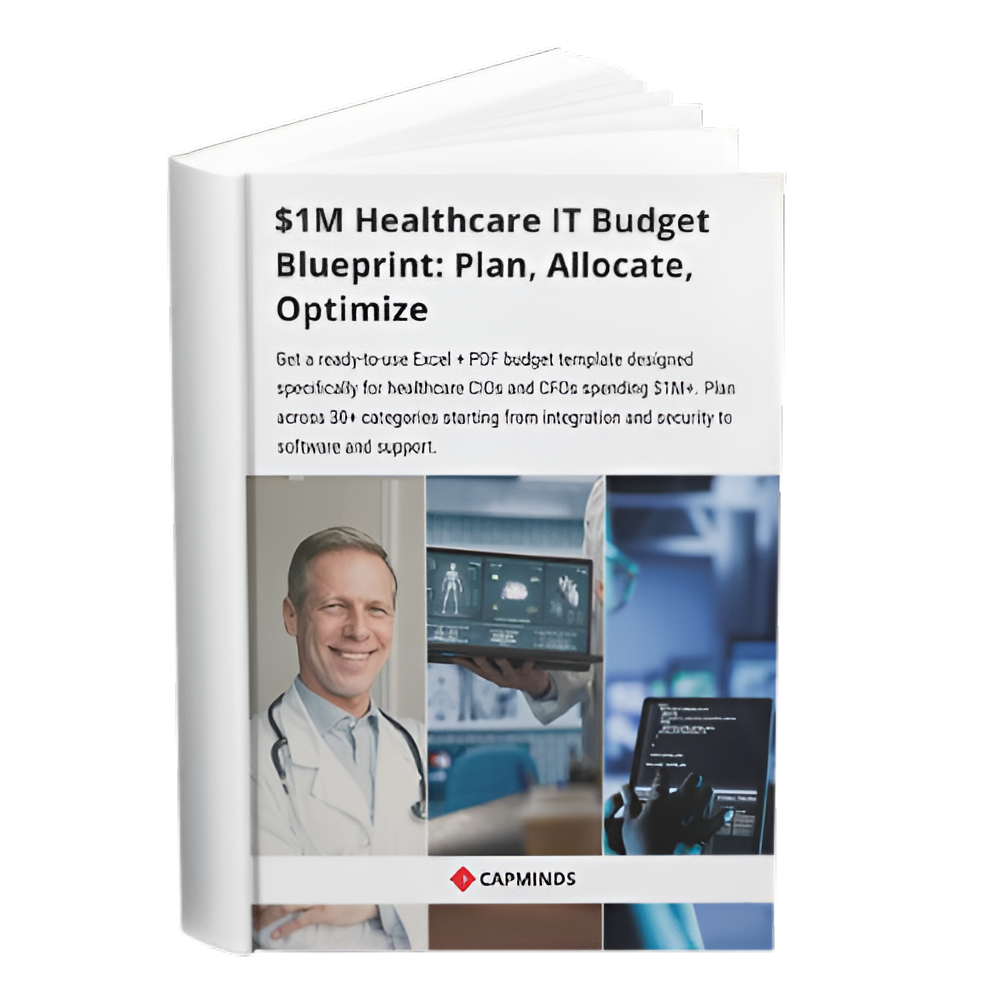
Contact us now to get your FREE $1M Healthcare IT Budget Template.