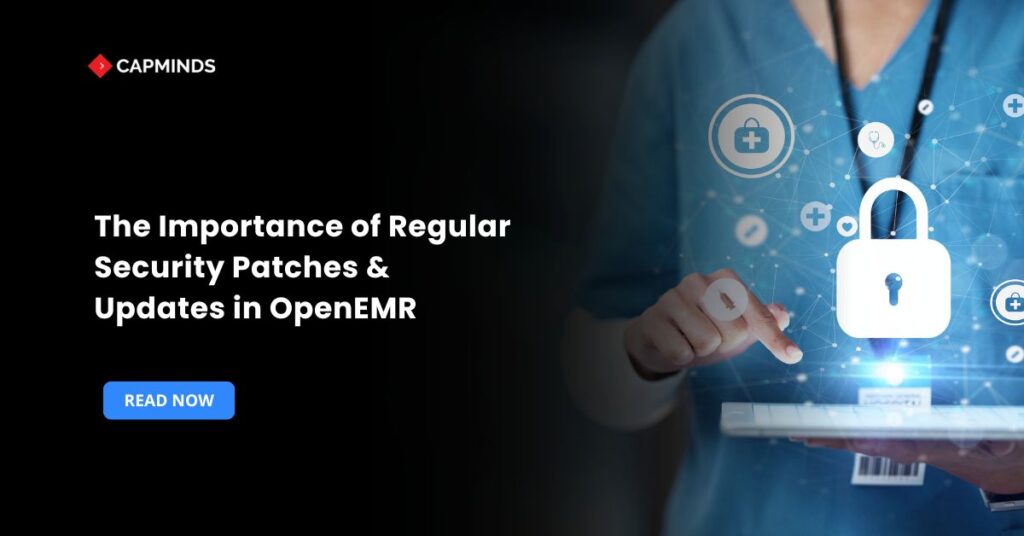
Why Regular OpenEMR Security Updates and Patches Matter
Healthcare providers increasingly rely significantly on digital tools to improve patient care, ensure compliance, and safeguard sensitive health information. Among open source EMR systems, OpenEMR stands out as a reliable option for clinics and hospitals.
Cyberattacks on healthcare organizations increase year after year, and one critical measure is sometimes overlooked: keeping your EMR system up to speed with regular security patches.
In this blog, you’ll know why upgrades are necessary, how they secure your system, and why working with an expert OpenEMR development business ensures long-term security and efficiency.
What Are OpenEMR Security Updates and Patches?
OpenEMR security updates are new software releases that often bundle multiple fixes and enhancements, while patches are incremental fixes targeting specific bugs or vulnerabilities in the code.
In practice, these updates may include anything from bug fixes and performance improvements to critical security hotfixes. Support providers describe their role as monitoring OpenEMR for risks and “updates with patches to seal any security holes” as part of ongoing maintenance.
Because OpenEMR is open-source, its global developer community can rapidly identify flaws and deliver patches – meaning “open-source platforms evolve faster” than proprietary systems. In short, effective OpenEMR vulnerability management means staying current with these updates and patches so that any known security hole is promptly closed.
Why OpenEMR Security Patches Matter in Healthcare IT
Healthcare data is among the most valuable items on some websites. Patient records are a repository of social security numbers, medical history, and financial records, and thus a prime target. The susceptibility of attackers exists due to the inability to upgrade OpenEMR.
Security patches address the vulnerabilities. They correct bugs found in the original code, loopholes that could be used to hack the system, and strengthen the whole system. It might be wise to lock your clinic at night; by not bolting patches, you are the same as leaving your front door wide open..
Common Security Vulnerabilities Addressed by OpenEMR Updates
OpenEMR security patches regularly fix a variety of common vulnerabilities. For example:
- Authorization and authentication flaws: Patches close critical bugs like those that allowed bypassing the patient-portal login by manipulating the URL. Any loophole in user authentication or privilege checks is addressed to ensure only authorized staff can access PHI.
- SQL Injection and code execution: Patches frequently target vulnerabilities that permit harmful SQL queries. For example, a serious SQL injection vulnerability in OpenEMR’s REST API that would have exposed patient data was recently addressed.
- Cross-Site Scripting: Updates frequently fix XSS vulnerabilities that allow hackers to insert scripts into the EMR interface.
- Problems with file uploads and path traversal: Vulnerabilities that allowed illegal file uploads or path traversals have been fixed.
- Session and API bugs: To stop data leaks and guarantee data integrity, additional patches fix flaws in session management or particular modules.
By installing these updates, organizations mitigate risks from the latest known attack vectors and strengthen overall OpenEMR cybersecurity.
OpenEMR Security Updates Support HIPAA Compliance and Risk Management
Unprotected data is prohibited by government requirements, including HIPAA. Failure to comply may cause large fines, lawsuits, and loss of patient confidence. Obsolete software increases the risk of a breach and exposes businesses to legal risks.
Clinics can achieve compliance requirements by applying patches and updates regularly. Maintaining secure systems reduces risk exposure while also telling patients that you care about their privacy.
Many providers collaborate with EMR integration vendors or professionals in OpenEMR development services to maintain compliance while reducing stress on their internal staff.
How Security Updates Help Protect Patient Trust and Data Privacy
A single breach may destroy years of trust and harm your reputation. By proactively updating your EMR system, you reassure patients that their health information is safe with you.
Consumers expect advanced digital health experiences; keeping your EMR system secure is not an option, it is necessary for providing great treatment. Clinics that prioritize system maintenance build better relationships with their communities.
OpenEMR Customizations Impact Security and Updates
Workflows are unique to each clinic or hospital. That’s why OpenEMR customization is so crucial. Custom modules, interfaces, and add-ons improve your EMR’s efficiency. These same customizations, however, can pose hazards if not kept up to date with fundamental security fixes.
A reliable OpenEMR development company ensures your custom features are secure and compatible. In the absence of this support, you run the risk of performance hiccups, downtime, or even data leakage. Upgrades make sure that the main system and the additions are in sync, minimizing risks.
OpenEMR Integrations and Interoperability
Healthcare pushes towards interoperability, and EMR data integration becomes more important than ever. Practices may now connect OpenEMR to labs, pharmacies, imaging centers, and payers. These integrations improve care while simultaneously increasing the attack surface.
Outdated systems make integrations vulnerable. Enhancing security increases the paths through which data is shared, and this reduces the chances of unauthorized access. Collaborating with EMR integration service providers helps to ensure the systems interact without issues and concerns, and ensure patient data safety.
Risks of Delaying OpenEMR Security Updates
- Data breaches can lead to identity theft or fraud.
- System failure during cyber-attacks or malware infections.
- Increased compliance penalties owing to obsolete security frameworks
- Compatibility difficulties with third-party integrations and tools.
These risks can be avoided with a methodical approach to patch management.
Related: 5 OpenEMR Security Best Practices Every Clinic Should Follow
Why Healthcare Organizations Delay OpenEMR Updates
Many clinics put off updating because they are concerned about downtime or technological concerns. You may have even wondered, “What if the update breaks our custom workflows?”. This hesitation is reasonable. After all, healthcare teams rely on systems that run properly around the clock.
But here’s the truth:
Ignoring updates leads to worse difficulties down the road. With the appropriate OpenEMR development services, updates may be tested in staging environments before going live. This ensures that your clinic remains secure and uninterrupted.
How Open Source EMR Systems Remain Strong
One of the benefits of open source EMR systems like OpenEMR is the community that surrounds them. Developers throughout the world identify flaws and promptly deliver patches. Unlike proprietary systems, which may cause delays in updates, open source platforms evolve faster due to community supervision.
Still, clinics require expertise to properly implement these updates. A professional OpenEMR development company fills the gap between open source innovation and real-world clinical operations.
Reducing Downtime and Operational Disruptions
Healthcare activities rely on uninterrupted system availability. A few hours of unavailability upset the schedule of patients, introduced delays in treatment, and frustrated employees. The old EMR systems are also more prone to failure, malfunction, and malware infections and leading to expensive interruptions.
Consistently fixing them prevents the occurrence of cyber attacks as well as enhances stability. They fix the existing bugs, make the system work better, and keep your system running. This will enable the physicians and the staff to focus on the patients rather than worrying about the systems slacking down or sudden outages.
Comprehensive OpenEMR & Security Services by CapMinds
At CapMinds, we understand that healthcare providers can’t afford risks when it comes to data security and patient trust. That’s why our digital health tech services are built to keep your practice secure, compliant, and efficient.
From OpenEMR customization to ongoing regular updates and security patches, we deliver end-to-end solutions tailored for clinics and hospitals of all sizes.
Our expert team ensures your systems run smoothly while reducing downtime and compliance risks. With CapMinds, you gain a trusted partner to manage your EMR with precision, so you can focus entirely on delivering better care.
Our key services include:
- Custom EHR/EMR Development – Designed to match your workflows
- OpenEMR Customization & Integration – Tailored modules, APIs, and add-ons
- Regular Updates & Security Patches – Proactive patch management for HIPAA compliance
- OpenEMR Support & Maintenance – 24/7 monitoring, testing, and troubleshooting
Secure your OpenEMR system with CapMinds’ proven OpenEMR development services.
Let us help you protect patient data, ensure compliance, and empower your practice with reliable healthcare technology.
FAQs
How often should healthcare organizations install OpenEMR security updates?
Updates should be applied as promptly as possible. In essence, HIPAA guidelines require covered businesses to “fix critical CVEs quickly” after they are discovered.
In actuality, this means that routine updates can be planned on a regular cycle, but critical security fixes should be applied right away. In order to test and apply updates and make sure that no significant vulnerabilities remain in the system, many firms schedule monthly maintenance windows.
Can outdated OpenEMR versions create HIPAA compliance risks?
Yes. Running an outdated OpenEMR with known security holes is a compliance risk. Installing software upgrades is one of the risks that covered businesses must manage to comply with HIPAA’s Security Rule.
Under HIPAA, a breach caused by a preventable vulnerability is probably considered negligence. To put it briefly, neglecting to keep OpenEMR up to date may result in avoidable HIPAA infractions and fines.
What security vulnerabilities do OpenEMR patches typically fix?
Common web application vulnerabilities are frequently fixed by OpenEMR updates, including:
- Fixes that stop unwanted database access or server takeover include SQL Injection and Remote Code Execution.
- Patches that sanitize inputs to prevent malicious scripts from operating on users’ browsers are known as cross-site scripting.
- Fixes for privilege escalation issues or login bypasses in the admin and portal interfaces are examples of authentication/authorization flaws.
- Patches that prevent hackers from uploading harmful files or accessing private directories are known as file upload and path traversal patches.
Each OpenEMR release addresses specific CVEs.
How can healthcare providers update OpenEMR without causing downtime?
Clinics should set up a test server that replicates the live system and deploy updates there first. Updates should be carefully scheduled. This confirms that no custom workflows are disrupted by the patch. After that, carry out the update during a planned maintenance window or off-peak hours.
Before deploying upgrades, always make complete backups so you can easily go back if necessary. Near-zero downtime can also be attained by using a load-balanced configuration or an incremental update technique. These safety measures, along with potential vendor support, allow for the safe rollout of updates with little disruption to service.
Should healthcare organizations use a managed OpenEMR support provider for patch management?
Yes, enlisting an OpenEMR support provider is a best practice for many clinics. Specialized vendors offer 24/7 monitoring, vulnerability scanning, and rapid patch deployment.
For example, Qiaben notes that professional teams “monitor your system and apply patches” continuously to maintain security and HIPAA compliance. By outsourcing patch management to experts, organizations ensure that updates aren’t overlooked and that any issues are handled by experienced professionals, keeping both the technology and compliance teams satisfied.