RPM/RTM Implementation & Integration Services
Increase Remote Care Adoption by 35% with Integrated RPM & RTM
Build an integrated RPM/RTM program that connects patient onboarding, remote monitoring, EHR workflows, and care-team action into a scalable model for remote care.


















Our RPM RTM Implementation Services
Build the Remote Monitoring Workflow From Device to Decision
Advanced Capabilities
Advanced Capabilities for Remote Care at Scale
Device-to-EHR Data Architecture
Build secure data flows that ingest device and wearable readings, normalize incoming information, and deliver usable patient data into clinical workflows.
Multi-Device & Multi-Platform Connectivity
Connect different device manufacturers and monitoring platforms through APIs, integration layers, normalization, and scalable RPM IoT integration.
FHIR, HL7 & API-Based Integration
Use standards-based interoperability and custom APIs to connect remote monitoring platforms with EHRs, patient applications, analytics environments, and healthcare systems.
Real-Time Monitoring & Alert Workflows
Configure thresholds, alerts, escalation rules, and care-team routing so abnormal readings can move from detection to appropriate clinical action.
Patient Enrollment & Engagement Automation
Automate onboarding reminders, device education, measurement prompts, adherence workflows, and patient communications to make participation easier to sustain.
Care-Team Dashboard & Worklist Design
Give nurses, physicians, care managers, and other authorized staff role-specific visibility into readings, trends, alerts, unresolved tasks, and patient status.
RPM/RTM Documentation & Billing Workflows
Structure documentation and operational workflows around monitoring activity, clinical review, communication, and reimbursement requirements so the program can operate consistently.
Monitoring Analytics & Risk Stratification
Analyze longitudinal readings, adherence, trends, exceptions, and patient activity to help care teams identify patients who may require earlier intervention.
Multi-Condition RPM/RTM Programs
Support condition-specific monitoring workflows across areas such as hypertension, heart failure, diabetes, COPD, rehabilitation, and other appropriate remote-care programs.
Security, Privacy & Data Governance
Apply appropriate access controls, secure integrations, auditability, and healthcare data protection practices across devices, applications, APIs, and clinical systems.
Business Outcomes
Turn Remote Monitoring Into Measurable Operational Value
Case Studies
We’ve successfully implemented a range of solutions. See how healthcare organizations
like yours achieved measurable results with CapMinds.
End-to-End RCM Automation for UiPath Using a Custom EMR
- 100% automation of standard RCM processes
- 50% faster claim turnaround
- Zero errors in claim formatting and submission

Westside Behavioral Care with a Custom EMR Platform
- Centralized EMR with consolidated patient data.
- 100% paperless onboarding process
- 90% automation in scheduling and documentation

UDS Reporting for Ventura County Health Care Agency (VCHCA)
- Automated processing of 100,000+ records
- FHIR validation and HRSA mock submission in 10 weeks
- 100% HRSA compliance
How Much RPM/RTM Revenue Are You Leaving Uncaptured?
Tell us where enrollment, workflow, integration, or billing documentation is falling short. We’ll help identify practical opportunities to improve your remote-care program.
Who Do We Serve?
Hospitals & Health Systems

Cardiology, Pulmonology & Endocrinology Practices
Physical, Occupational & Speech Therapy Practices

Multi-Site Medical Groups

FQHC & Community Health Centers
Accountable Care Organizations
Home Health & Post-Acute Care Providers

Digital Health Organizations

Healthcare Technology Vendors
Why Healthcare Organizations Choose CapMinds as an RPM/RTM Implementation Company
18+ Years in Healthcare Technology
Bring proven healthcare technology experience to complex decisions, workflows, risks, and long-term transformation goals confidently.
10+ Remote Care Technologies
Work across RPM, RTM, connected devices, wearables, EHRs, interoperability platforms, APIs, analytics, and digital health environments.
Device-to-EHR Integration Expertise
Connect remote monitoring platforms, connected devices, and EHRs through APIs, HL7, FHIR, and appropriate healthcare integration technologies.
End-to-End RPM/RTM Implementation
Manage configuration, device integration, EHR connectivity, workflows, billing, testing, deployment, and post-go-live optimization through one healthcare technology team.
Deep Healthcare Interoperability Expertise
Connect RPM/RTM platforms with EHRs, devices, patient portals, and healthcare systems using HL7, FHIR, APIs, and integration technologies.
Clinical Workflow & Revenue Alignment
Align patient engagement, care-team workflows, documentation, billing, and analytics to build remote monitoring programs around your complete care model.

What Our Clients Say
Hear from healthcare leaders who’ve transformed their operations with our services & solution.
What Makes Us a Trusted Healthcare RPM and RTM Implementation Partner?
A successful RPM/RTM program connects devices, patient data, clinical workflows, alerts, documentation, billing, and EHRs into one reliable care process. CapMinds combines implementation, interoperability, automation, analytics, security, and ongoing support with privacy and compliance practices aligned with HIPAA, GDPR, and applicable healthcare requirements.
HIPAA
COMPLIANCE
ISO 9001:2015
CERTIFIED

GDPR
COMPLIANT
SOC 2 TYPE 2
CERTIFIED
HL7 FHIR
STANDARDS

SNOMED CT
COMPATIBLE

HITRUST
ALIGNED
Technology and Platform Experience
Connect the Technology Behind Modern Remote Care
EHR & EMR Platforms

Healthcare Interoperability

Device & Remote Monitoring Technologies
Connected Medical Devices
Wearables
Patient-Generated Health Data
Device APIs
Interface & Integration Engines

Remote Care & Digital Health

Cloud & Infrastructure
Planning to Launch or Expand an RPM/RTM Program?
Get support across program strategy, device and EHR integration, patient workflows, billing, analytics, and ongoing RPM/RTM operations.
- RPM/RTM strategy and vendor selection
- Implementation and configuration
- Device and EHR integration
- Billing and RCM integration
- Analytics and automation
- Managed support and optimization
Frequently Asked Questions
Can CapMinds integrate RPM devices with our existing EHR?
Yes. CapMinds can support device-to-platform and platform-to-EHR integration using APIs, HL7, FHIR, and other appropriate healthcare integration technologies. The exact approach depends on the device, RPM/RTM platform, EHR, and available interfaces.
Can you integrate RPM/RTM data directly into the EHR?
Yes. We can integrate RPM and RTM data directly into the EHR system in real time. Depending on the target EHR and architecture, monitoring data can be exchanged through FHIR, HL7, APIs, or other supported integration mechanisms. The objective is to make clinically relevant readings and monitoring information available within established clinical workflows.
Can you integrate RPM/RTM with OpenEMR?
Yes. We support OpenEMR-focused healthcare integration and RPM workflows, including secure APIs, device data integration, clinical workflows, alerts, documentation, and billing-related workflows.
How do you handle RPM/RTM alerts?
We handle alert workflows by configurable thresholds, prioritization, routing, escalation, notifications, and care-team assignment. The workflow can be designed around the organization’s clinical protocols and monitoring requirements.
Can you integrate RPM/RTM with billing and RCM?
Yes. CapMinds can connect monitoring activity, documentation, patient interactions, time tracking, coding workflows, claims processes, and RCM reporting. Current CMS requirements should be incorporated into the workflow design and kept updated as regulations and coding policies change. CMS has introduced additional RTM codes and descriptor changes for 2026.
Can you migrate an existing RPM platform?
Yes. RPM platform migration can include platform assessment, patient/device mapping, data migration planning, integration redevelopment, workflow validation, testing, cutover, and post-migration support.
Can you support multi-condition RPM programs?
Yes. We support multi-condition RPM Programs. A scalable architecture can support multiple monitoring programs, conditions, devices, providers, and patient populations while maintaining standardized integration and workflow foundations.
How long does an RPM/RTM implementation take?
There is no single timeline. A rough estimate of RPM and RTM implementation might take around 3 months to 6 months. This is not an exact time period for RPM/RTM implementation. The Duration depends on the RPM/RTM platform, number and type of devices, EHR integrations, patient workflows, billing requirements, data migration, customization, testing, and deployment scope. A detailed implementation assessment is needed to establish a realistic implementation timeline.
Can CapMinds integrate RPM devices with our existing EHR?
Yes. CapMinds can support RPM Integration Services using APIs, HL7, FHIR, and other appropriate healthcare integration technologies. The exact architecture depends on the device, monitoring platform, EHR, and available interfaces.
Can you integrate medical devices and wearables?
Yes. CapMinds can assist in integrating medical devices and wearable devices with an RPM program. Device and wearable integration can be designed around the available APIs, data formats, connectivity capabilities, and requirements of the specific technology.
Can you support patient enrollment and device onboarding?
Yes. We support patient enrollment and device onboarding. Implementation can cover patient identification, enrollment, consent, device assignment, education, activation, troubleshooting, reminders, and ongoing engagement workflows.
Can you support RTM workflow design?
Yes. RTM workflow design can align therapeutic monitoring, patient engagement, clinical review, documentation, escalation, and applicable billing workflows with the organization’s care model.
Can you support RTM for physical therapy and rehabilitation?
Yes. CapMinds supports RTM for physical therapy and rehabilitation. RTM workflows can support use cases involving therapeutic adherence, therapy response, respiratory monitoring, musculoskeletal monitoring, and related remote therapeutic workflows. CapMinds also documents RTM implementations and specialty use cases across physical therapy, respiratory care, cardiology, and other areas.
How do you protect RPM/RTM data?
We ensure protecting the RPM and RTM data by incorporating secure APIs, access controls, encryption, audit logging, device authentication, protected infrastructure, and appropriate healthcare security practices across the data flow.
Can you support RPM/RTM after implementation?
Yes. CapMinds can support RPM/RTM post-implementation to make sure seamless adoption and technical on-going support. Post-go-live support can include integration monitoring, device connectivity troubleshooting, workflow optimization, user support, analytics, billing workflow optimization, enhancements, and ongoing system maintenance.
How does an RPM/RTM implementation engagement begin?
The engagement typically begins with an assessment of your current remote-care environment, including devices, platforms, EHRs, integrations, patient workflows, clinical operations, billing processes, security requirements, and reporting needs. The result is a practical implementation roadmap covering workflow design, integration, configuration, testing, deployment, and post-go-live optimization.
Resources
Insights for Healthcare Technology Teams.
How to Build a Disconnected Environment System Using OpenEMR
For the past decade, enterprise healthcare IT operated on a single, unquestioned assumption: the cloud is always reachable. Multi-campus hospital networks, Management Services Organizations, and specialty medical […]
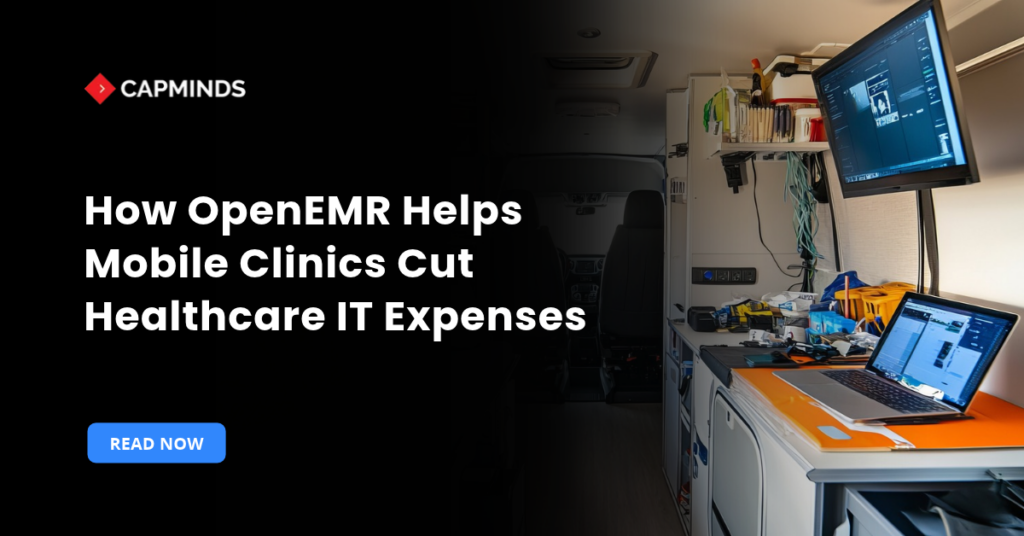
How OpenEMR Helps Mobile Clinics Cut Healthcare IT Expenses
More than 3,600 mobile clinics function in the United States and provide approximately 10 million health care visits annually. As they grow, they face healthcare IT costs, […]
How to Build a HIPAA-Compliant EMR/CRM for Plastic Surgery and Aesthetic Medicine
A plastic surgery patient may begin as an Instagram inquiry, schedule a consultation, submit medical history, receive a treatment estimate, upload photographs, pay a deposit, undergo a […]