Healthcare Data Engineering Services
Turn Fragmented Healthcare Data Into a Trusted
Foundation for Business Decisions
Build healthcare data pipelines, warehouses, and lakehouses that reduce manual preparation, improve reporting accuracy, and support analytics as your business grows.

















Our Healthcare Data Engineering Services
Healthcare Data Engineering Solutions That Power Reporting, Analytics & Growth
Advanced Capabilities
Advanced Engineering Capabilities for Complex Healthcare Datasets
Cross-System Record Matching
Connect patient, provider, and facility records through identifier crosswalks and matching rules, with review workflows for uncertain matches.
Historical Reporting Reconstruction
Model effective dates, late-arriving records, and corrections so teams can distinguish when events occurred from when information became available.
Versioned Clinical Terminology
Maintain traceable mappings for clinical codes, local values, and reference data, preserving which definitions were applied during processing.
Data Contracts & Schema Controls
Define expected fields, structures, and acceptance rules between producers and consumers. Assess upstream changes before incorporating them into dependent workflows.
Source-to-Metric Lineage
Trace selected measures through source fields and healthcare data transformation logic to investigate discrepancies and evaluate the impact of changes.
Reproducible Analytics & AI Datasets
Version processing logic and document dataset composition so analytical inputs can be recreated and differences between releases can be examined.
Tenant-Aware Data Architecture
Establish processing, storage, and access boundaries for healthcare products serving multiple organizations, according to the required isolation model.
Purpose-Specific Data Protection
Apply healthcare data governance controls, including permissions, masking, tokenization, or approved de-identification methods, based on the dataset’s intended use and applicable requirements.
Business Outcomes
Business Outcomes We Help You Achieve
Case Studies
We’ve successfully implemented a range of solutions. See how healthcare organizations
like yours achieved measurable results with CapMinds.

End-to-End RCM Automation for UiPath Using a Custom EMR
- 100% automation of standard RCM processes
- 50% faster claim turnaround
- Zero errors in claim formatting and submission

Westside Behavioral Care with a Custom EMR Platform
- Centralized EMR with consolidated patient data.
- 100% paperless onboarding process
- 90% automation in scheduling and documentation

UDS Reporting for Ventura County Health Care Agency (VCHCA)
- Automated processing of 100,000+ records
- FHIR validation and HRSA mock submission in 10 weeks
- 100% HRSA compliance
Which Report Takes Your Team Too Long to Prepare?
Start with one delayed report, recurring export, or dataset that needs constant attention. Our healthcare data engineering consulting helps identify where engineering work could remove the most effort.
Who Do We Serve?

Hospitals & Health Systems

Multi-Specialty Medical Groups

Ambulatory Care Networks

Federally Qualified Health Centers

Management Services Organizations

Healthcare Payers

Digital Health Companies

Laboratories & Diagnostic Centers

Revenue Cycle Organizations

Healthcare Research Organizations

Healthcare Technology Vendors
Why Choose CapMinds for Healthcare Data Engineering?
18+ Years in Healthcare Technology
Bring proven healthcare technology experience to complex decisions, workflows, risks, and long-term transformation goals confidently.

Delivery Planning With Dependencies Visible
Identify vendor access, sample data, mapping approvals, and testing needs early, keeping delivery dependencies visible throughout the engagement.
Practical Documentation and Handoff
Provide deployment configurations, operational runbooks, and knowledge transfer so internal teams can maintain and extend the completed platform.
70+ EHR Projects Delivered Across 10 States
Apply experience from healthcare delivery to data engineering projects requiring clinical workflow knowledge, source understanding, and coordinated implementation.
One Accountable Team for Data, Cloud & Integration
Coordinate pipelines, source connectivity, and cloud infrastructure through one team, with clear ownership of decisions, dependencies, and milestones.
Cost-Conscious Platform Decisions
Assess existing infrastructure, processing frequency, storage requirements, and operating capacity to avoid unnecessary services, complexity, and recurring expenditure.

What Our Clients Say
Hear from healthcare leaders who’ve transformed their operations with our services & solution.
What Makes CapMinds a Trusted Healthcare Data Engineering Company
A new product feature may need information from an unfamiliar EHR. A reporting discrepancy may begin with an application workflow. An acquisition may introduce years of records in another format. CapMinds brings data engineering together with healthcare application development, interoperability, cloud, and analytics to address these connected requirements. As part of Healthcare Product Engineering, the work supports both immediate reporting priorities and the applications your organization plans to build next.

HIPAA
COMPLIANCE

ISO 9001:2015
CERTIFIED

GDPR
COMPLIANT

SOC 2 TYPE 2
CERTIFIED

HL7 FHIR
STANDARDS

SNOMED CT
COMPATIBLE

HITRUST
ALIGNED
Technology & Platform Experience
The Technologies Behind Your Healthcare Data Platform
Healthcare Data Sources

Healthcare Data Standards & Formats

Data Ingestion & Exchange
Transformation & Processing

Storage & Analytical Models

Workflow Orchestration

Cloud & Deployment

Need Better Healthcare Data Reporting?
Tell us where reporting slows down or data becomes difficult to manage. Our team can help you identify the right engineering solution for your business needs.
- Connect Healthcare Data
- Automate Data Pipelines
- Build Data Warehouses
- Improve Data Quality
- Modernize Data Infrastructure
Frequently Asked Questions
What healthcare data engineering projects can CapMinds handle?
Engagements can cover integration, ETL/ELT pipelines, warehouses, lakehouses, quality controls, migration, cloud infrastructure, FHIR processing, and monitoring. Scope can focus on one reporting bottleneck or a broader healthcare data platform development initiative.
How do you decide between ETL and ELT?
We consider destination capabilities, transformation complexity, processing demand, and requirements for handling sensitive information. Different workloads within the same environment may benefit from different approaches.
What happens when source records are incomplete or inconsistent?
We agree on validation and cleansing rules, then distinguish approved corrections from exceptions requiring review. Missing clinical facts remain flagged, and unresolved limitations are documented for dataset users.
How do you prepare FHIR data for analytics?
We ingest supported resources, resolve relevant references, and transform selected information into analytical models. Available profiles, terminology, resource history, and authorized access determine what the source can provide.
How do you detect missing data when a pipeline completes successfully?
Checks can compare expected volumes, required fields, freshness, and source-to-target totals. Agreed thresholds determine whether to flag a dataset, withhold it from publication, or route it for investigation.
Can you take over pipelines built by another team?
We can assess existing code, documentation, dependencies, access, and known incidents. That review establishes stabilization priorities and the scope for ongoing maintenance or enhancement.
Can you connect our EHR, laboratory, and billing data?
Yes. We assess the authorized APIs, database connections, and export methods available from each source. Vendor capabilities, access restrictions, data volumes, and refresh needs determine the implementation approach.
Do we need a warehouse, a lakehouse, or both?
The choice depends on reporting requirements, data types, analytical workloads, and operational capacity. We assess your current environment before recommending a new platform or additional architecture.
Can existing reporting continue during a platform migration?
A staged migration can keep current reports available while you test and reconcile replacement datasets. Source access, synchronization options, reporting dependencies, and acceptable downtime shape the cutover plan.
How frequently can our datasets refresh?
Refresh frequency depends on source availability, extraction limits, processing volume, and validation requirements. We establish the baseline and agree on a practical refresh objective for each dataset.
What protections can you implement for sensitive healthcare data?
Controls can include restricted access, encryption, secrets management, audit logging, and approved masking. Design also accounts for temporary files, rejected records, logs, backups, and nonproduction datasets within your compliance program.
What determines project cost and delivery time?
Key factors include source count, access readiness, data condition, transformation complexity, migration volume, and acceptance requirements. Delivery can be phased around usable datasets, with dependencies and scope changes reviewed throughout the engagement.
Resources
Insights for Healthcare Technology Teams.
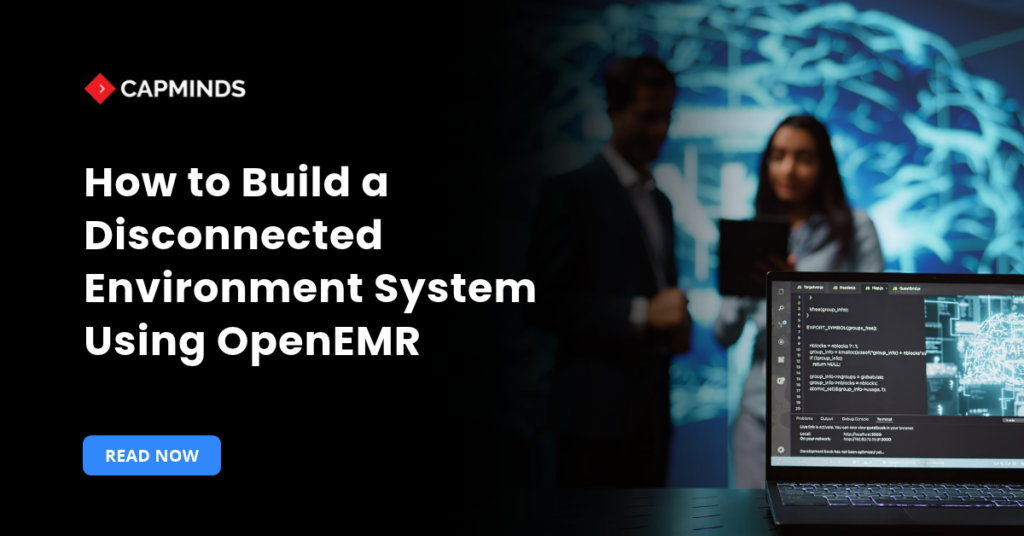
How to Build a Disconnected Environment System Using OpenEMR
For the past decade, enterprise healthcare IT operated on a single, unquestioned assumption: the cloud is always reachable. Multi-campus hospital networks, Management Services Organizations, and specialty medical […]
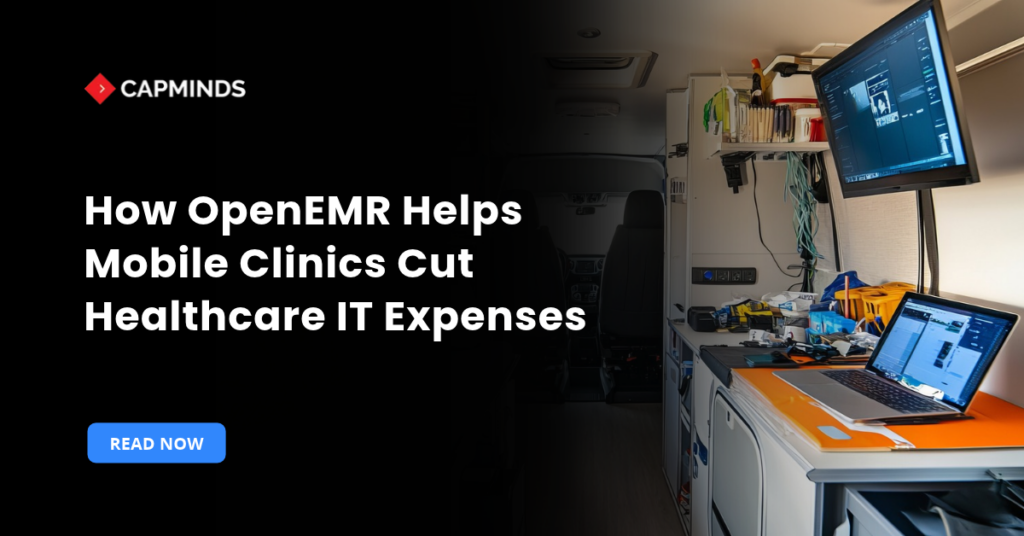
How OpenEMR Helps Mobile Clinics Cut Healthcare IT Expenses
More than 3,600 mobile clinics function in the United States and provide approximately 10 million health care visits annually. As they grow, they face healthcare IT costs, […]
FHIR Bulk Data Export At Scale: Lessons Learned From Processing Billions Of Clinical Records
Processing a few thousand FHIR resources is straightforward. Processing billions is an entirely different discipline, one where the wrong architecture doesn’t just slow you down; it brings […]