Healthcare Infrastructure Modernization Services
Modernize Healthcare Infrastructure Without Disrupting Critical Operations
Upgrade aging infrastructure through controlled phases that protect your
healthcare applications, data, integrations, users, and recovery priorities.




















Our Services
Modernize the Infrastructure Your Healthcare Operations Depend On
Advanced Capabilities
Add Greater Control to Complex Modernization Programs
Clinical Service Dependency Mapping
See which servers, databases, networks, interfaces, vendors, and cloud services support scheduling, documentation, orders, results, imaging, billing, and patient access.
Healthcare IT Asset and CMDB Governance
Maintain clearer records of infrastructure ownership, configuration, location, support status, lifecycle, dependencies, and data-handling responsibilities.
Capacity and Demand Forecasting
Use transaction growth, imaging volume, location expansion, application demand, and performance trends to guide future infrastructure investment.
Resilience Engineering
Test capacity limits, component failures, network loss, failover, recovery, and dependency behavior before those conditions affect real users.
Healthcare Platform Engineering
Give application teams approved infrastructure patterns, reusable modules, deployment workflows, and standardized environments instead of rebuilding foundations for every project.
Synthetic Workflow Validation
Confirm that users can log in, schedule, document, retrieve results, submit claims, access portals, and complete integrations after infrastructure changes.
Multi-Site Infrastructure Standardization
Apply consistent connectivity, security, monitoring, backup, documentation, platform, and operational standards across your healthcare locations.
Acquisition and Site Integration
Assess and standardize inherited infrastructure, networks, identities, vendors, cloud environments, applications, and support responsibilities after expansion or acquisition.
Technology Cost Governance
Connect hardware, cloud, facilities, licensing, connectivity, support, and platform spending with ownership, utilization, business criticality, and expected value.
Infrastructure Decommissioning Governance
Retire systems only after applications, interfaces, data retention, backups, security, contracts, vendor dependencies, and operational requirements are resolved.
Business Outcomes
What Infrastructure Modernization Should Change for You
Case Studies
We’ve successfully implemented a range of solutions. See how healthcare organizations
like yours achieved measurable results with CapMinds.
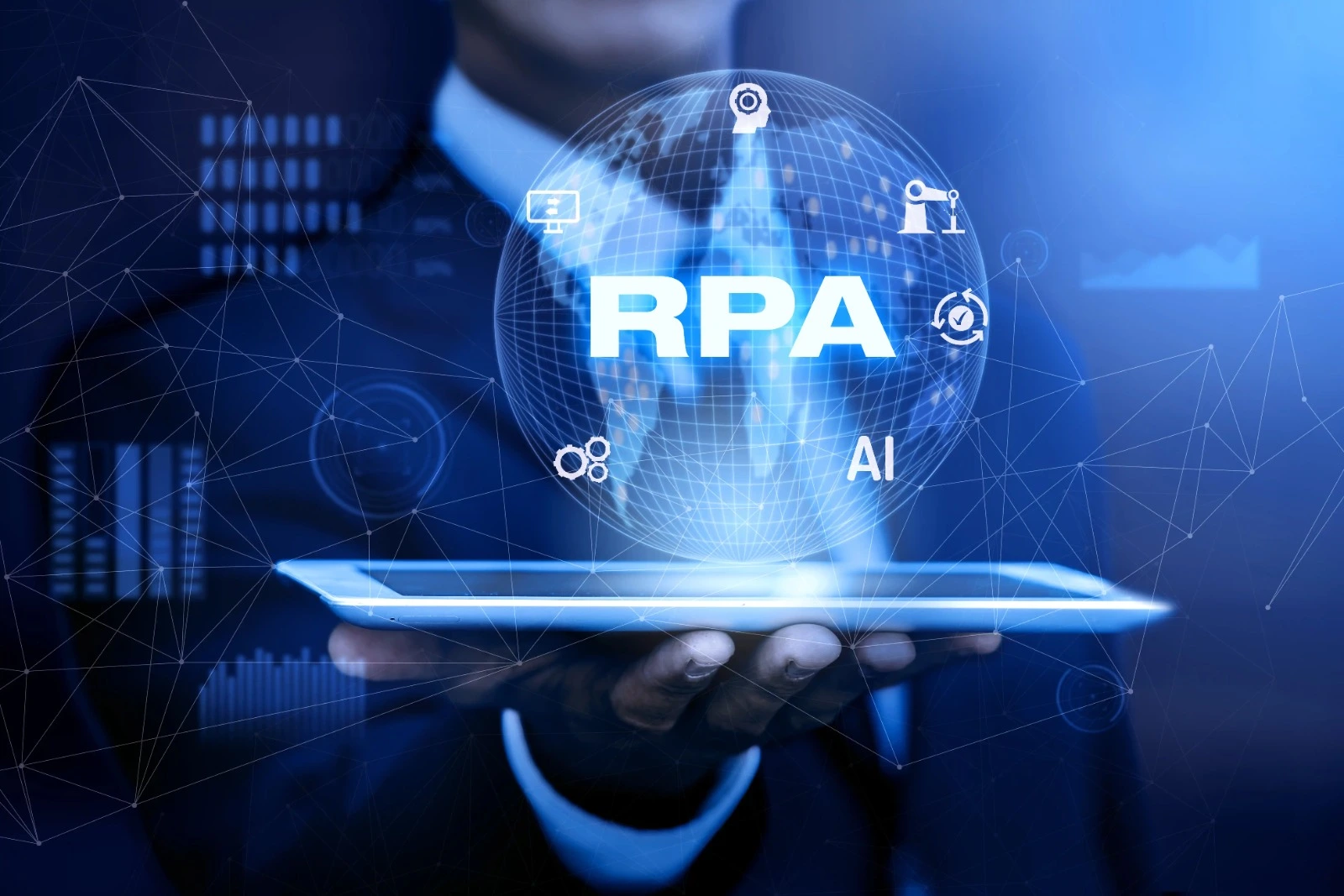
End-to-End RCM Automation for UiPath Using a Custom EMR
- 100% automation of standard RCM processes
- 50% faster claim turnaround
- Zero errors in claim formatting and submission

Westside Behavioral Care with a Custom EMR Platform
- Centralized EMR with consolidated patient data.
- 100% paperless onboarding process
- 90% automation in scheduling and documentation

UDS Reporting for Ventura County Health Care Agency (VCHCA)
- Automated processing of 100,000+ records
- FHIR validation and HRSA mock submission in 10 weeks
- 100% HRSA compliance
Not Sure What to Modernize First?
Tell us where aging infrastructure, performance, security, recovery, or cost is creating pressure. We’ll help identify the priorities worth addressing first.
Who Do We Serve?
Hospitals & Health Systems
Medical Groups & Multi-Site Practices

FQHCs & Community Health Centers

Behavioral Health Organizations

Specialty & Ambulatory Practices

Laboratories & Imaging Centers

Healthcare Payers, TPAs & MSOs

Health Information Exchanges

Public Health Organizations

Life Sciences Organizations

Digital Health Companies

Healthcare SaaS Vendors
Why Healthcare Organizations Choose CapMinds?
18+ Years in Healthcare Technology
Bring proven healthcare technology experience to complex decisions, workflows, risks, and long-term transformation goals confidently.

1300+ Completed Projects
Apply lessons from 1300+ completed projects to improve planning, execution, problem-solving, and delivery confidence consistently.
Trusted by 400+ Healthcare Organizations
Partner with a healthcare technology team trusted by 400+ organizations for accountable, dependable project delivery.
Scalable Modernization Delivery
Modernize critical infrastructure first, then scale proven patterns across sites and workloads with minimal disruption.
Infrastructure Cost Optimization
Replace aging infrastructure with right-sized platforms that reduce overhead while preserving performance, scalability, and resilience.
Healthcare Infrastructure Assurance
Validate infrastructure changes against healthcare applications, integrations, access, recovery, and workflows before operational reliance begins.

What Our Clients Say
Hear from healthcare leaders who’ve transformed their operations with our services & solution.
What Makes US a Trusted
Healthcare Infrastructure Modernization Partner
CapMinds combines healthcare infrastructure expertise with phased modernization, resilient architecture, controlled transitions, and validated delivery across complex environments.
HIPAA
COMPLIANCE

ISO 9001:2015
CERTIFIED

GDPR
COMPLIANT
SOC 2 TYPE 2
CERTIFIED

HL7 FHIR
STANDARDS

SNOMED CT
COMPATIBLE

HITRUST
ALIGNED
Technology and Integration Experience
Infrastructure Platforms and Technologies We Work With
Cloud and Hybrid Infrastructure ➜

Servers and Operating Systems ➜

Virtualization and Containers ➜
Infrastructure Automation ➜

Networking and Connectivity ➜

Monitoring and Observability ➜

Storage, Backup, and Recovery ➜

Comparison Table
| Evaluation Area | Hardware or Infrastructure Vendor | Cloud Migration Provider | CapMinds Infrastructure Modernization |
|---|---|---|---|
| Primary focus | Replaces infrastructure components | Moves workloads into cloud | Modernizes the technology foundation around healthcare operations |
| Discovery | Hardware, capacity, and utilization | Cloud workload inventory | Infrastructure, applications, interfaces, identities, users, vendors, and workflows |
| Legacy strategy | Replaces aging equipment | Primarily rehosts workloads | Upgrade, consolidate, isolate, migrate, replace, retain, or retire |
| Healthcare context | Usually limited | Depends on the project team | Clinical, patient, revenue, laboratory, imaging, and data-exchange workflows |
| Data center strategy | Hardware refresh | Cloud exit | Consolidation, colocation, hybrid transition, modernization, or controlled exit |
| Network scope | Devices and connectivity | Cloud connectivity | Application paths, segmentation, wireless, multi-site performance, and failover |
| Virtualization | Hypervisor upgrades | Virtual-machine migration | Consolidation, containers, Kubernetes, cloud transition, automation, and governance |
| Security | Infrastructure controls | Cloud-native settings | Identity, segmentation, configurations, encryption, vulnerabilities, logs, and recovery |
| Recovery | Backup technology | Cloud recovery services | Application dependencies, recovery order, workflow testing, runbooks, and continuity |
| Validation | Component availability | Workload availability | Applications, integrations, permissions, performance, recovery, and user workflows |
| Cost planning | Equipment and licenses | Cloud consumption | Hardware, cloud, facilities, connectivity, support, licensing, and business value |
| Post-project | Vendor support | Technical handoff | Stabilization, documentation, knowledge transfer, optimization, or separate managed services |
Replace Infrastructure Risk With a Clear Modernization Plan
Move forward with prioritized investments, controlled implementation, validated healthcare workflows, stronger recovery, and clear operational ownership.
- Reduce unsupported infrastructure risk
- Improve application reliability and performance
- Strengthen security and access controls
- Modernize backup and recovery
- Automate infrastructure delivery
- MStandardize distributed environments
Frequently Asked Questions
What are healthcare infrastructure modernization services?
Healthcare infrastructure modernization services improve the servers, storage, networks, data centers, cloud resources, virtualization, containers, security, automation, monitoring, backup, and recovery supporting healthcare operations. The objective is a more reliable, secure, scalable, supportable, and recoverable environment.
Can our existing healthcare applications remain?
Yes. Many infrastructure programs improve the platforms beneath existing applications. We assess operating-system compatibility, licensing, databases, interfaces, file paths, identity, latency, performance, vendor requirements, and recovery before changing the environment.
Does CapMinds support AWS, Azure, and Google Cloud?
Yes. CapMinds can support AWS, Microsoft Azure, Google Cloud, private cloud, hybrid environments, data centers, and on-premises infrastructure. The target architecture should follow workload requirements, existing investments, latency, security, recovery, skills, and long-term cost.
Does modern infrastructure automatically make us HIPAA compliant?
No. Technology can support HIPAA safeguards, but compliance also depends on risk analysis, policies, workforce practices, access decisions, vendor arrangements, incident response, contingency planning, documentation, and ongoing evaluation. Modernization does not replace those responsibilities.
What happens to legacy infrastructure afterward?
Legacy components are retired only after applications, interfaces, data, backups, retention, access, vendor, contract, and recovery requirements receive approval. Decommissioning can include configuration archiving, data sanitization, license closure, inventory updates, and secure hardware disposal.
How much does healthcare infrastructure modernization cost?
Cost depends on locations, workloads, hardware, storage, networks, facilities, cloud services, licenses, vendors, security controls, migration requirements, recovery objectives, and implementation phases. Reliable pricing requires an inventory, dependency assessment, target architecture, and agreed transition scope.
Do we need to replace every legacy system?
No. You don’t have to replace every legacy system. Some platforms may be upgraded, isolated, consolidated, rehosted, replatformed, or retained. Replacement is appropriate only when supportability, risk, cost, compatibility, performance, or business requirements justify the disruption and investment.
Can infrastructure be modernized without downtime?
Disruption can often be reduced through clustering, replication, parallel environments, phased implementation, maintenance windows, rollback plans, and workflow testing. Zero downtime should not be assumed for every workload. Acceptable interruption and contingency procedures must be defined during planning.
What is included in data center modernization?
Scope may include facility assessment, hardware consolidation, footprint reduction, server and storage transition, network redesign, colocation, cloud adoption, hybrid architecture, backup changes, carrier coordination, vendor management, and secure equipment decommissioning.
How are EHR workflows protected during modernization?
We map EHR dependencies before change and test authentication, databases, interfaces, APIs, scheduled jobs, orders, results, reports, user access, backups, failover, and application performance afterward. ONC recommends coordinated validation and maintenance of EHR hardware, software, and connected APIs.
How long does an infrastructure modernization project take?
A focused server, storage, network, or virtualization initiative may take several weeks. A multi-site program involving data centers, cloud, applications, security, recovery, procurement, and multiple vendors may require several months or phased delivery.
What happens after modernization?
The project typically concludes with stabilization, issue resolution, performance tuning, capacity review, security validation, recovery testing, documentation, knowledge transfer, cost optimization, and approved legacy decommissioning. Ongoing operations can remain internal or move into a separately scoped managed-services engagement.
Resources
Insights for Healthcare Technology Teams.
Modernizing Hospital Infrastructure: Managed IT as the Foundation for Cloud Migration
To meet the expanding digital needs in healthcare, hospital systems are under pressure to upgrade their Health IT infrastructure. Telemedicine and AI-driven analytics, as well as EHR […]