Build Your Own EHR
Custom EHR & EMR Software Development for Healthcare & Specialty Practices
CapMinds builds custom EHR and EMR platforms that your organization fully owns eliminating per-provider licensing fees and vendor lock-in. Tailored to your specialty workflows, with built-in HL7/FHIR integrations, AI-powered capabilities, HIPAA compliance, and go-live in 60 days.
What 1,000+ U.S. Healthcare Providers Are
Saying About Their Current EHR
Workflow bottlenecks, rigid templates, and runaway subscription costs, these aren’t isolated complaints.
If any of this sounds like your day-to-day, it’s time for a different conversation.
71%
Charting takes longer than patient time
66%
Running two or more disconnected systems
54%
Too many steps for routine clinical tasks
49%
Can’t configure the system for our specialty
43%
Monthly SaaS fees keep climbing with no added value
46%
Patient data is locked behind a vendor we don’t control
Build an EHR That Works the Way Your Practice Does.
A custom-built EHR isn’t just a software project. It’s a clinical infrastructure decision that affects every provider,
every patient interaction, and every billing cycle for years to come.
Fully Configurable, Zero Compromises
Generic EHR platforms are built for the mass market. CapMinds develops around your care model, documentation standards, workflows, and operational requirements.
- Specialty-specific templates and note structures
- Custom intake forms and patient questionnaires
- Add only the modules you actually need
- HL7, FHIR and integration-ready architecture
Cut Licensing Costs by Up to 60%
Avoid recurring subscriptions, annual contracts, and expensive upgrade fees. Own your platform and control your roadmap.
- No per-provider subscription costs
- Complete source code ownership
- Fixed-scope transparent pricing
- No vendor lock-in
Go Live in 3–6 Months
Launch core clinical capabilities first and expand over time using a phased delivery strategy designed for rapid adoption.
- Phased build-and-launch approach
- Core modules delivered within 90 days
- Scalable architecture for future growth
- Post-launch optimization support
Specialty-Specific EHR Development
A custom EHR should not treat every specialty as a variation of primary care. CapMinds builds workflows around
specialty-specific documentation, billing, procedures, reporting, integrations, and care delivery needs.
Core Features We Can Build Into Your Custom EHR
AI Assist
Reduce the Administrative Burden on Every Provider in Your Practice

Ambient Clinical Documentation
Real-time patient conversations are converted into structured, compliant clinical notes without your provider ever touching a keyboard. Documentation time drops. Provider focus goes back to the patient, where it belongs. Built directly into your custom EHR during development — not bolted on afterward.
Smart Nursing Intake
Give nursing teams an intelligent intake layer that guides symptom collection, flags clinical priorities, and populates structured data fields before the provider even walks in. Role-based access ensures every team member sees exactly what they need and nothing they don’t.
Automated Medical Coding
ICD-10 and CPT codes are generated directly from clinical documentation, no manual lookup, no coder rework. Coding accuracy goes up. Claim denials go down. Revenue cycles move faster. Integrated into your EMR so billing staff aren’t waiting on documentation to close encounters.
Intelligent Front-Desk Automation
Appointment scheduling, patient reminders, eligibility pings, and routine inquiry handling are managed without staff intervention. Your front desk handles exceptions, not repetition. Built into the EHR, not a third-party chatbot patched into your workflow.
Appointment Scheduling
From First Click to Confirmed Appointment Without the Phone Tag

Self-Scheduling Through Patient Portal
Patients book, reschedule, or cancel in real time through a secure web or mobile portal connected directly to your EHR calendar. No call center required. Fewer front-desk interruptions. Slot utilization goes up automatically.
Automated Multi-Channel Reminders
SMS, email, and portal-based reminders go out on your configured schedule, before appointments, after scheduling, and when follow-ups are overdue. No-show rates drop. Manual reminder calls become a thing of the past.
Multi-Provider Calendar Management
Centralized calendar views for every provider, room, and resource in your practice. Recurring visits, complex scheduling rules, and multi-location operations are handled without a separate scheduling tool.
Specialty-Mapped Appointment Types
Configure each visit type to pull the right intake form, billing code, documentation template, and time block. A wellness visit doesn’t look like an acute visit. A procedure slot doesn’t behave like a follow-up. Every appointment type does exactly what it’s supposed to.
Patient Charting
Cut Documentation Time Without Cutting Clinical Detail

Specialty-Specific Charting Workflows
Charting templates built around your specialty, not a generic medical model adapted for dozens of use cases. Relevant fields surface automatically. Unnecessary clutter is gone. Providers stop wading through forms that don’t apply to their patients.
Clinically-Aware Documentation Assistance
Beyond transcription, your EHR surfaces contextually relevant prompts, care gaps, and risk flags based on what’s being documented. Providers get the right nudges at the right moment without breaking their documentation rhythm.
Configurable SOAP Note Templates
Structured SOAP notes, H&P formats, progress notes, and procedure summaries built to your documentation standards. Templates are flexible enough to allow provider variation but structured enough to meet payer and regulatory expectations.
Pre-Visit Digital Intake
Patients complete structured intake questionnaires before they arrive. Responses map directly into the chart. When the provider walks in, the basics are already populated, vitals queued, chief complaint documented, and history started.
Patient Engagement
Give Patients Visibility Into Their Care, Not Just Access to a Portal

Branded Patient Portal and Mobile App
A white-labeled portal and mobile experience tied directly to your EHR. Patients view records, pay bills, schedule visits, send messages, and view lab results from one place. Your brand. Your workflows. No third-party app is competing for the relationship.
Embedded Telehealth
Video visits are built into your EHR — not linked out to a separate platform. Providers document during the session, generate prescriptions, and schedule follow-ups without leaving the encounter. Continuity of care holds across in-person and virtual visits.
HIPAA-Compliant Secure Messaging
Encrypted messaging between patients and care team members runs through the EHR. No personal email. No unsecured text. Full audit trails. Role-based access ensures messages reach the right team member every time.
Controlled Health Record Access
Patients see what they’re entitled to see under HIPAA and your practice’s access policies. Records can be selectively shared, time-limited, or restricted, all within the same platform. No separate record release process required.
Lab & Imaging Orders
Order, Receive, and Act on Diagnostic Results, All Without Leaving the Chart
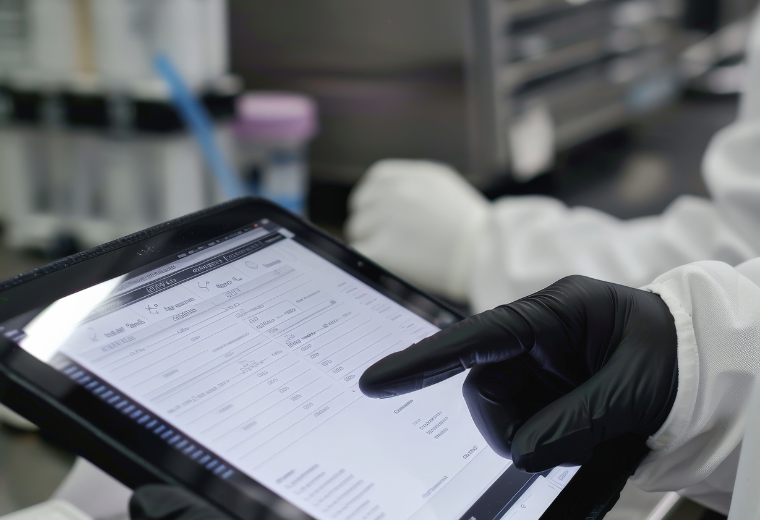
Integrated Lab and Imaging Orders
Providers order labs and imaging studies directly from the patient chart. Orders are transmitted to connected labs and radiology systems without manual faxing, phone calls, or double entry. The chart stays clean. The audit trail stays intact.
Real-Time Results Review
Completed results return directly into the EHR, structured, flagged for abnormalities, and linked to the patient encounter. Clinical decisions get made faster because providers aren’t waiting for a fax or checking a separate portal.
Secure Result Sharing
Providers share lab and imaging results with patients or referring specialists through encrypted, HIPAA-compliant workflows. Patients receive results through the portal. Specialists receive structured data, not PDFs attached to an email.
Automated Result Notifications
When a result lands, the right person gets notified. Configurable alerts route critical values to the appropriate provider, flag abnormals for review, and trigger follow-up task creation. Nothing sits unreviewed in an inbox.
Electronic Prescribing (eRx)
Prescribe Securely, Check Automatically, Refill Without the Paperwork

EPCS-Compliant Electronic Prescribing
Controlled substance prescriptions transmitted electronically with full EPCS authentication. Regulatory compliance is built in from day one. Pharmacy connectivity was established during development, not added as an afterthought.
Patient-Initiated Refill Requests
Patients request refills or medication adjustments through the portal. Requests route to the provider for review, approval, and transmission, no phone calls, no fax-back loops. Prescription history is visible in context.
Drug Interaction and Allergy Screening
Every prescription is automatically checked against the patient’s documented allergies and current medication list. Interactions are flagged before the prescription is sent. Providers make better prescribing decisions with less manual cross-referencing.
Reduced Prescription Admin Overhead
Renewal workflows, prior authorization prompts, and pharmacy communication run through the EHR. Manual prescription handling is replaced with structured workflows that reduce the administrative lift on both clinical and front-desk staff.
Medical Billing & Revenue
Close the Gap Between Clinical Documentation and Clean Claim Submission

Clearinghouse Integration
Connect to your preferred clearinghouse directly through the EHR. Eligibility checks, claims submission, remittance posting, and denial alerts all move through a single connected workflow, no separate billing software required unless you want it.
Automated Superbill Generation
Superbills are generated from the clinical encounter, coding pulled from documentation, procedures linked to charges, and modifiers applied by visit type. Billing staff review, not rebuild. Accuracy improves. Clean claim rates go up.
End-to-End Revenue Cycle Visibility
Charge capture, claim submission, payer responses, denial reasons, and reimbursement status are all visible from one dashboard. Revenue cycle managers see the full picture. Nothing falls through the cracks between clinical and billing.
Patient Payment Workflows
Digital payment collection, automated billing statements, and outstanding balance reminders built into the EHR. Patients pay online or through the portal. Collections improve. Finance team time spent on manual invoicing goes down.
Administration & Practice Management
Run Your Entire Practice From One Screen, Not Five Different Tools

Custom Reporting and Analytics
Clinical, operational, and financial reports generated on demand from live EHR data. Track provider productivity, payer mix performance, no-show rates, charge capture gaps, and quality measure compliance. Reports you actually need — not 40 pre-built templates you don’t.
Role-Based Access Controls
Granular permissions define exactly what each user role can see, edit, and export. HIPAA-aligned security controls protect sensitive records while giving every team member appropriate visibility. Audit logs capture every access event.
Unified Practice Management
Patient registration, scheduling, documentation, billing, and reporting in a single connected system. No re-keying data between platforms. No staff switching between four different logins to complete one task.
Structured Data Import and Export
Migrate data from your existing EHR into your new system with structured import tools. Export patient records, billing data, or clinical reports in compliant formats. Interoperability with outside systems is maintained through configurable HL7 and FHIR connections.
Integration
Why Choose CapMinds for Custom EHR Development?
● Built for Outcomes
At CapMinds, we build custom EHR solutions with one clear purpose: making doctors' and clinic teams' lives easier. Every feature is designed to streamline charting, reduce billing errors, improve reporting, and strengthen patient communication.
● Value at Every Step
We focus on features that create the greatest impact, eliminating unnecessary complexity and ensuring your EHR investment supports workflows efficiently while delivering meaningful business value.
● Results You Can Measure
Improve documentation quality, reduce manual work, access patient information faster, and create smoother system integrations that enhance productivity and overall operational performance.
● Business ROI Focus
We build EHR platforms that support both patient care and business growth by improving billing accuracy, reducing duplicate work, and scaling alongside your organization.
● Smarter Roadmap
Our team helps prioritize the right features at the right time, creating a strategic implementation roadmap that maximizes value while minimizing risk and development costs.
● Support That Adds Value
Our partnership continues beyond launch with proactive updates, issue resolution, optimization, and ongoing improvements as your team grows and healthcare regulations evolve.
Cost-Effective Custom EHR/EMR Development
Choose one of the custom EHR development service models based on your needs!
Dedicated EHR
Development Team
Kickstart your EHR software development journey with a team of experts who will bring your vision to life — build from scratch or enhance an existing system.
- Adaptable Scope Adjustments
- Agile Development with Sprint-Based Deliverables
- Transparent Cost Management
- Pay Upon Milestone Completion
Custom EHR
Development
Designed for specialized healthcare providers, this model develops a fully customized EHR system tailored to the unique workflows and requirements of your practice.
- End-to-End Custom EMR/EHR Development
- Clinic-Specific Design & Workflow Integration
- Pay in Phases Linked to Deliverables
- Deployment Within 3–4 Months
White-Label EHR
Solution
Our SaaS-based White-Label EHR allows healthcare businesses to utilize our EHR software under their branding — ideal for launching a branded system without starting from scratch.
- Fully Customizable Branding & UI
- Dedicated Tenant Account for Seamless Management
- Subscription-Based pricinga Model
- Ready-to-Deploy in Just 1 Month
What Our Clients Say
Hear from healthcare leaders who’ve transformed their operations with our services & solution.


What Makes Us a Trusted
Healthcare Technology Partner
We adhere to the security standards, compliance frameworks, and governance practices healthcare organizations require to support audit readiness, uptime, operational resilience, and long-term reliability.

HIPAA
COMPLIANCE

ISO 9001:2015
CERTIFIED

GDPR
COMPLIANT
SOC 2 TYPE 2
CERTIFIED

HL7 FHIR
STANDARDS

SNOMED CT
COMPATIBLE

HITRUST
ALIGNED
Resources
Insights for Healthcare Technology Teams
10 Best EHR/EMR Development Companies in the USA
When choosing an EHR/EMR development company, comparing software feature lists, technology stacks, and hourly rates is insufficient. Clinical documentation, patient identification, orders, results, medications, care plans, referrals, […]
How to Select the Right EHR/EMR Consultant
Almost all U.S. hospitals and doctors today use certified EHR systems. EHR and EMR initiatives are complex. EHR adoption and optimization are risky despite their widespread acceptance. […]

Custom EHR Architecture in 2026: How to Build for Scalability, Interoperability, and Future Regulations
The custom EHR architecture of 2026 must transition from being a static repository of patient information to a dynamic, intelligent, and globally compliant data platform. This shift […]